Criminalisation Is Common Minimum Programme of UPA and NDA:
[Citizens in Patna stress people’s action against criminal-politician-administration nexus in Bihar]
Buta Singh’s controversial order transferring 17 IPS officers in Bihar evoked widespread criticism and condemnation in Bihar. Administrative officials too voiced their protests with the Chief Secretary proceeding on a long protest leave. While the Chief Secretary eventually returned to work following a patch-up, the debate understandably did not stop with that. Beyond the question of bureaucratic seniority and propriety, the people promptly grasped the political essence of Buta Singh’s action - providing administrative ‘immunity’ to notorious criminals and easing out officials who had been taking a hard line against the criminal-politician nexus.
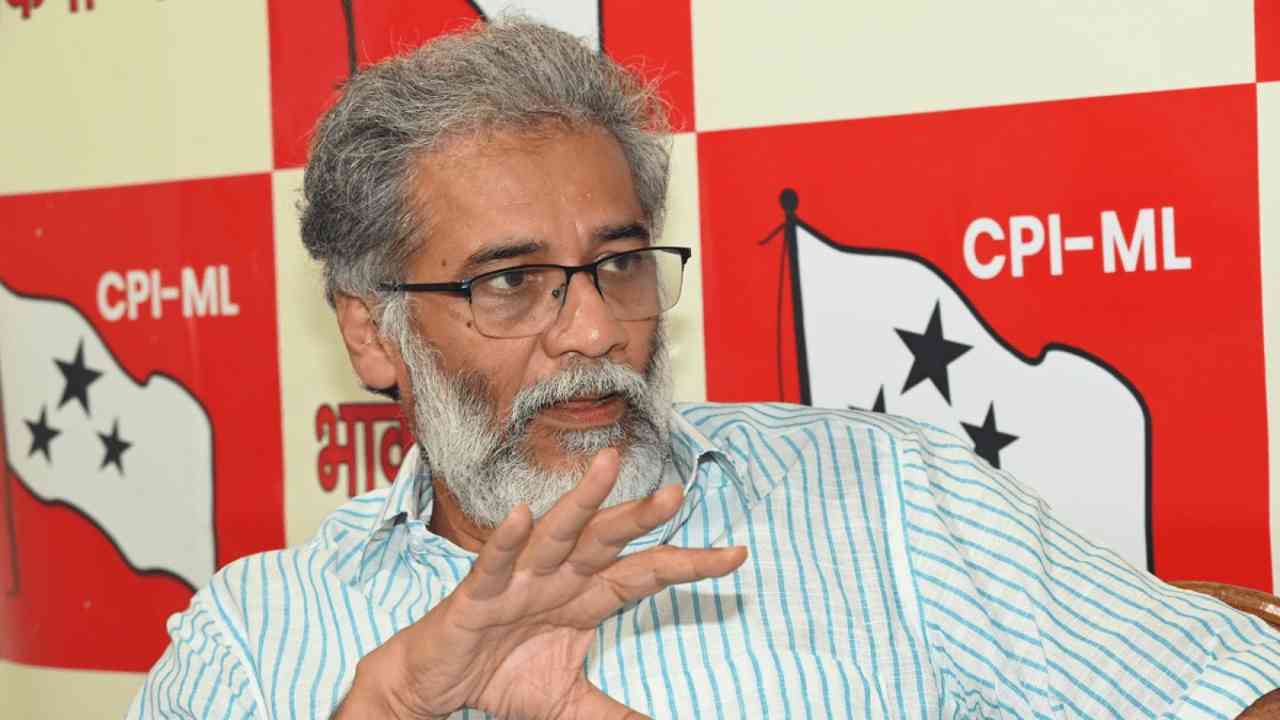
Against this backdrop a seminar on “Criminalisation and Challenges for Democracy in Bihar” was held in Patna on August 10 under the auspices of Nagarik Manch (Citizens’ Forum) in which retired and even serving officials voiced their opinions alongside Left and democratic political personalities. It was presided over by a 3-member presidium comprising advocates Ratneshwar Prasad Singh and Ravindra Giriyage and noted human rights activist Kishori Das. Ramji Rai, editor, Samkalin Janmat, conducted the proceedings. The well-attended seminar was addressed by CPI(ML) General Secretary, Com. Dipankar Bhattacharya, Shankar Prasad Tekariwal, leader of Samajwadi Party and former Finance Minister of Bihar government, Kedar Nath Pandey, CPI leader and MLC, Shashi Bhushan Sahai, former DGP, Bihar, Ajai Verma, an upright IPS officer who has filed a PIL in Patna High Court challenging the transfer orders issued by Buta Singh, and retired IAS official Ram Updesh Singh.
Initiating the discussion, Ajai Verma said corruption and criminalisation could never assume the proportions they have assumed today without the complicity or collusion of civil servants. He regretted that civil servants had lost the moral courage to uphold the Constitution and the spirit of public service. He called upon civil servants to think and act as conscientious citizens and not as bureaucratic appendages of the powers that be.
Retired IAS officer Ram Updesh Singh said today power-politics had become rotten and the bureaucracy crippled. He called for a massive awakening of the people as the only answer to criminalisation and degeneration of the administrtaion.
Former DGP Shashi Bhushan Sahai said that criminalisation of politics had now assumed menacing proportions with state power itself getting criminalized. It is becoming commonplace to see political leaders, MLAs, MPs, ministers and bureaucrats summoned to courts. He said the transfer orders issued by Buta Singh were aimed at reining in police officials while giving a free hand to notorious criminals like Shahabuddin.
In his concluding address Com. Dipankar said that criminalisation in Bihar had become an integral feature of governance. Citing a recent example from West Champaran, the district widely acknowledged as the original haven of kidnappers and big landowners, he showed how criminals and police worked in tandem to crush the rural poor’s strggle for land and liberty. On July 27, 2005 criminals dressed in police uniform attacked a group of agricultural labourers in a village in Gaunaha block, killing a woman and critically injuring several others while the actual police guarded them at a distance. The next day when Com. Birendra Gupta, a senior CPI(ML) leader of the region visited the spot, he was kidnapped by the criminals. When the Party District Secretary called on the SP in Bettiah, his first response was an outright denial. But as luck would have it, the SP received a phone call at that moment from the very criminals who had abducted Com. Gupta. They wanted instructions from him as to what was to be done to Com. Gupta! Since the telephonic talk took place in the presence of the CPI(ML) Secretary, the SP had to ask them not to take law into their own hands, and hand him over to the police. Com.Gupta was abducted at around 4.30 p.m. and the SP talked about sending police at 7.30 p.m. but they reached the spot only by 1.30 a.m. And even after 13 days, none of the culprits have been arrested. “Police and criminals function as the two hands of the administration and there is usually perfect coordination between the two,” Comrade Dipankar said.
Referring to the large-scale defection of criminals from the LJP to the JD(U), Comrade Dipankar described criminalisation as a great leveller in Bihar politics, as the common minimum plank of both UPA and NDA in the state. The oppressive feudal-kulak power structure in Bihar rests on the support of the criminal-politician-administration nexus and the Indian ruling elite is prepared to shelve the Constitution and tolerate, and even promote, criminalisation to prevent Bihar from proceeding in the direction of radical social transformation. The answer to this common minimum programme of the ruling elite lies in unleashing the common maximum protests of the people and the revolutionary movement of the rural poor can and must provide the backbone of such a people’s resistance. The struggling masses must show the way to combat and transform the criminalized polity in Bihar. q