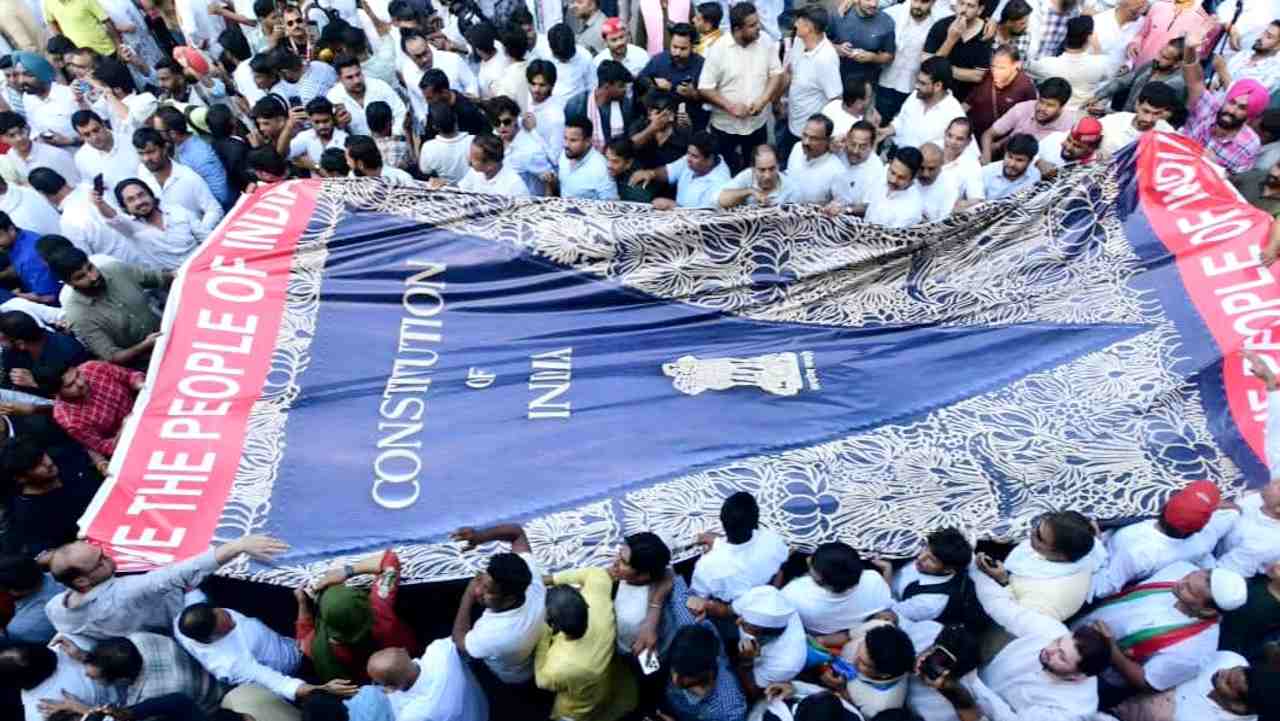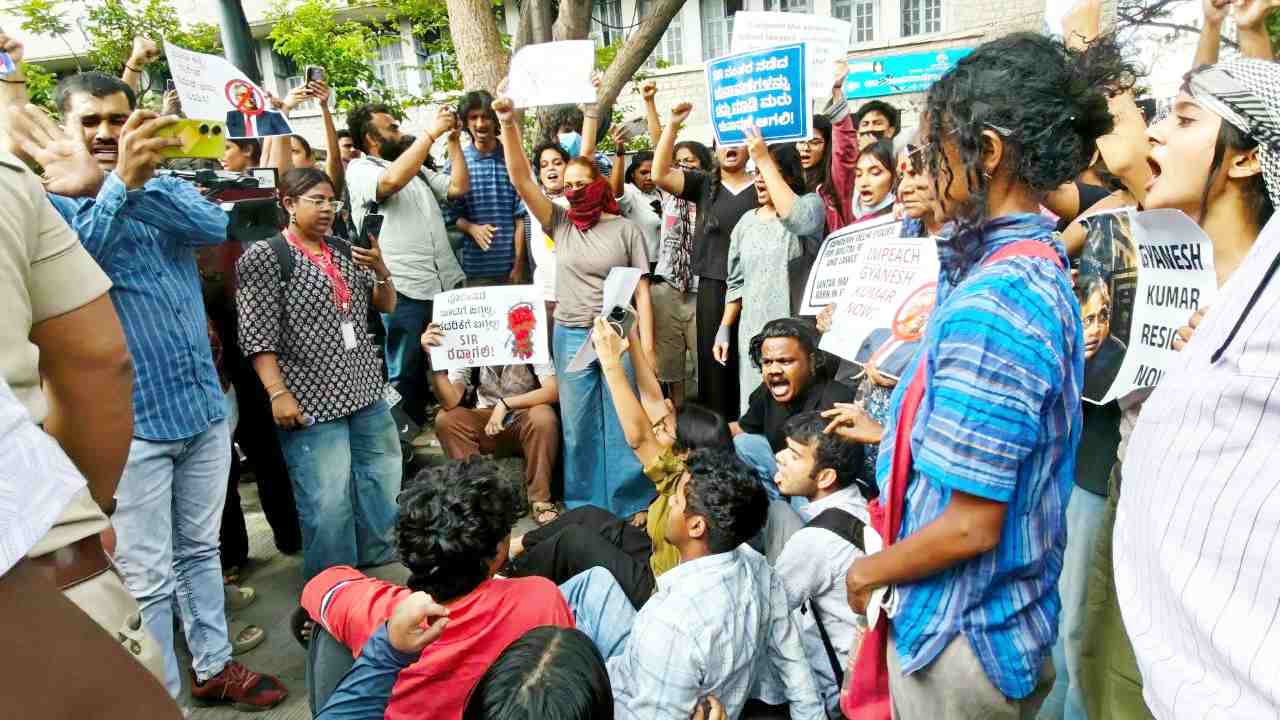

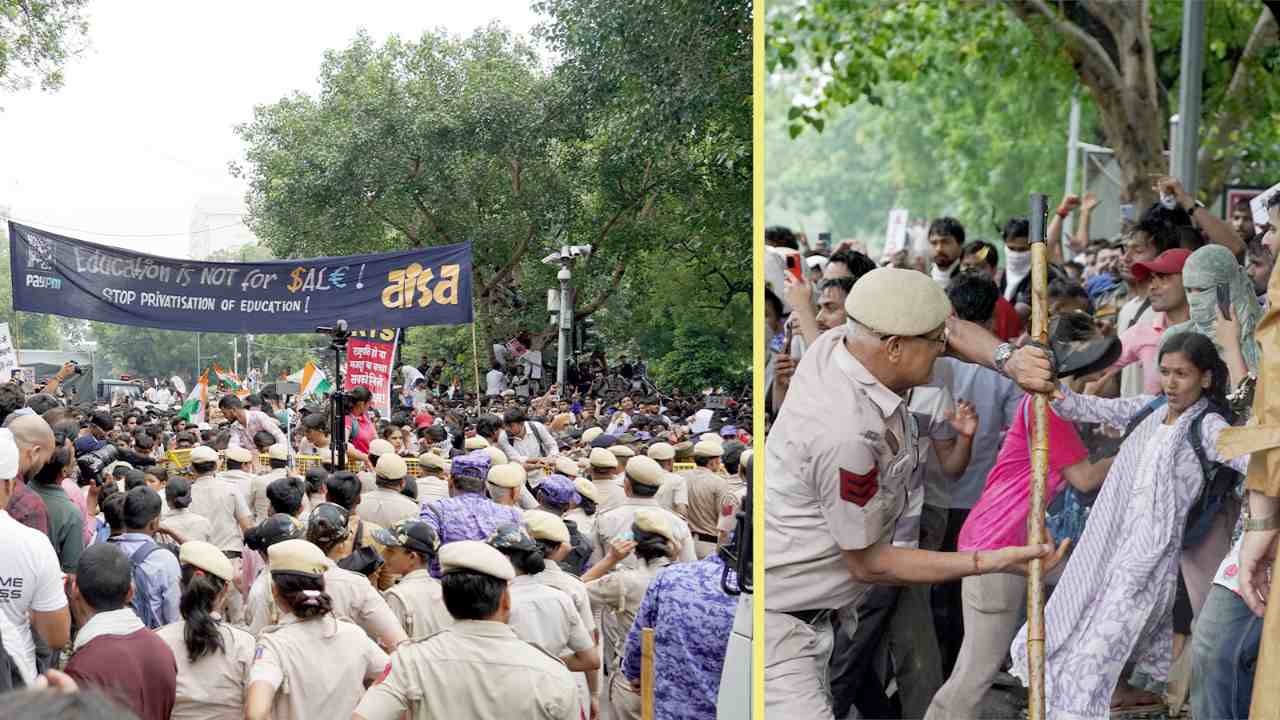
Delhi will remember July 20, 2026 for years and years to come. The fledgling digital outfit Cockroach Janata Party and progressive student organisations, notably AISA, had given a call for a march to Parliament on the inaugural day of the monsoon session to press for the resignation of Union Education Minister Dharmendra Pradhan. The government responded by issuing a police advisory which said that there was no permission for such a march and participants would be liable to be punished for participating in any unauthorised event. Just three days ago Amit Shah had changed the Police Commissioner of Delhi. Two days ahead of the march, climate activist Sonam Wangchuk who was on an indefinite fast at Jantar Mantar for the same demand had been bundled away wrapped in a white sheet by plain clothes police personnel. The 'new normal' common sense of Modi's India suggested that no parliament march worth its name was possible in these circumstances.
As the day began amidst heavy showers on July 20, Delhi realised that it had never seen a march like this. Waves of young people were surging through every road in the heart of Delhi. Barricades erected by the Delhi Police were overcome as easily as seasoned athletes cross hurdle races in track and field events. The whole of Delhi had become Jantar Mantar, every road was leading to the Parliament building. The monsoon session began, only to be adjourned amidst loud protests by the opposition. As the day progressed reports of severe baton charges, tear gas shelling and even stone pelting by the police started pouring in from all over Delhi. Many areas looked like battlefields covered in thick smoke and several protesters suffered critical injuries. Yet videos of young people facing baton charges with the tricolour or the Constitution in their hands signalled the courage and determination of India's new generation. And as the evening drew in, protesters could be seen reclaiming the Jantar Mantar protest site that had earlier been 'cleared up' by heavy police violence.
The sit-in protests at Jantar Mantar had begun exactly a month ago on 20 June. A week later, on 28 June started the indefinite fast by Sonam Wangchuk and six leaders of AISA. As days passed and the condition of the hunger strikers began to deteriorate in the heat and sweat of a taxing Delhi summer, three of the six fasting student activists had to be hospitalized, while the other three continued to refuse food. Yet the government did not care to respond. Nor did the Godi media care to report. They must have thought that this conspiracy of silence would tire the protesters out. But at the end of the day the power of word of mouth and the extensive coverage on social media proved more than equal to this devious Modi-Godi strategy. The turnout of July 20 took both the government and the media by utter surprise.
Indeed, the scale of spontaneous response to this new combination of digital satire and real world protest also exceeded the expectations of organisations involved in the campaign as well as opposition parties watching it from a distance. Given the disappointing experience of the 2012 anti-corruption movement under the leadership of Anna Hazare, there was understandably considerable scepticism around the CJP phenomenon and the role of Sonam Wangchuk in the ongoing struggle. The positions adopted by Sonam Wangchuk till recently in support of abrogation of Article 370 and many other policies of the Modi government did not inspire much confidence in his new found role as an opponent of the education-examination system in spite of his widely recognised record as an educator, innovator and climate activist. Yet the mass response to the July 20 call clearly showed that the protests had struck a deep chord with India's youth, not only on the agenda of education, examination and employment but also on the question of holding the government accountable.
The unprecedented scale and spirited nature of participation of the people, especially of the Gen Z contingent of youth below the age of thirty, made July 20 stand out as the unmistakable indication of the assertion of GenZ as a force for social and political change. It had shades of the July 2024 uprising in neighbouring Bangladesh or the September 2025 uprising of Nepal, both of which led to a change of government in their respective countries. Here the demand was only for resignation of the Union Education Minister to make him accountable for the serial paper leaks under his watch. In his notes sent from the hospital, Sonam Wangchuk had even appeared to omit that central demand, expressing his readiness to end his fast if the opposition could assure him of a serious parliamentary discussion on the agenda of education. The reduction of the demand for fixation of accountability with the government to the opposition raising the education agenda in Parliament, something which the opposition had repeatedly been doing in recent sessions, had confused and disappointed his supporters.
To the credit of the participants of the July 20 March to Parliament, it must be said that despite obvious lack of clarity and coordination, the marchers remained peaceful and determined, withstanding the brutality of the police and provocation of the agents of the Sangh brigade who joined the police to malign and attack the march in many parts of Delhi. It reminded us of the Modi government’s conspiracy to discredit and derail the historic farmers' movement after the 26 January 2021 tractor march. But just as the farmers regrouped and bounced back and the movement continued till the repeal of the three anti-farmer farm laws, India wishes the same strength and resilience to its youth to march forward till its core demands are met.
Ten years ago, students had risen in protest in India's universities following the shocking institutional murder of Rohith Vemula. The government had responded by jailing student leaders and maligning the student movement as an anti-national conspiracy. Then in January-February 2020, students and citizens, especially Muslim women, had launched an inspiring protest movement against divisive and discriminatory amendments to the Citizenship Act. The government suppressed that historic Shaheen Bagh protest movement by unleashing communal violence in Delhi and jailing activists under UAPA. Even after six years young scholars like Umar Khalid and Sharjeel Imam continue to languish in jail without any trial.
Unlike university-based student movements of the past, the Shaheen Bagh protests or the Delhi border farmers’ movement, this time the youth movement made its presence felt right in the heart of Delhi. It created a platform of unity where students from universities merged with the local youth from Delhi's neighbourhoods, parents mingled with their children, young women marched shoulder to shoulder with young men cutting across communities and cultures. Activists of AISA and other Left student organisations devoted their fullest energy and efforts to sustain and strengthen the movement against all odds, and demonstrated how student leaders like the hunger strikers Neha and Danish, Manish and Aameen, Hrishikesh and Deepak could also work alongside Sonam Wangchuk and CJP leaders like Abhijeet Dipke and Sourav Das.
Defying massive disenfranchisement and systematic denial of fundamental rights, serial electoral frauds and the relentless blitzkrieg of hate, lies and the all-pervasive fear and despair that seeks to reduce empowered vocal citizens to fearful loyal subjects, Jantar Mantar of July 2026, and the Parliament March of July 20 symbolise a decisive break with the fear and apathy that had gripped large sections of society. If protesters have to risk their lives to demand justice for the victims of paper leak and accountability of the education minister, then does Prime Minister Modi have any right to continue in office? The people of India have suffered enough, they now demand answers and accountability.