Liberation Publications
Charu Bhawan, U90,
Shakarpur, Delhi – 110092
info@cpiml.org | liberation@cpiml.org
www.cpiml.org | www.liberation.org.in
December 2025
ISBN Number: 978-81-987047-2-6
Price (Paperback): Rs. 400

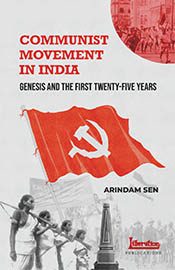
The book in your hand traces the genesis of the communist movement in India and its progress during the last leg of our freedom struggle. In this critical review, we focus the spotlight on the evolution of ideological-political line of the Communist Party of India, avoiding details on personal factors and organisational titbits, because with the passage of time the latter lose much of their relevance while the former remains as instructive as ever. And since this evolution always takes place both in response to and as a part of changes in the national-international situation, we have also tried to provide that perspective in the form of a running commentary on those developments, including periodic changes in Comintern (Communist International or CI) policies and Indian National Congress (INC or simply Congress) positions. In other words, we seek to study the communist movement not within its own narrow frame, but as part of a broader socio-political process. That is why we have allotted considerable space to narrating the overall political situation(s) in different periods, because bereft of that it would not have been possible to make a correct assessment of the communist praxis.
We have tried to capture the stimulating story of early Indian communism in ten chapters. The Prelude or Chapter I looks at the period 1857-1917, which provided the backdrops — international and national — to the initiation of the communist movement in our country. Chapter II (1917-25) discusses exactly how the CPI evolved out of scattered communist groups. Then we come to a couple of short periods that marked two stages in the Party’s ideological-political development. First, the period (1926-29, covered in Chapter III) of rapid expansion, accompanied by some ideological dilution, through Workers’ and Peasants’ Parties (WPPs). This period came to a close due to the CI’s opposition to the WPP venture and the wholesale arrests of leaders in the Meerut conspiracy case. Next the Party saw a spell of marginalisation in national politics (1930-34, discussed in Chapter IV) attributable to a left-sectarian line formulated by the Comintern. When in 1935 the CI discarded this line in favour of a broad anti-fascist front at international and national levels, the CPI also veered round to a more or less balanced political line and a united front policy that might ensure independent Left assertion within the mainstream of freedom movement. We cover this welcome shift in Chapter V (1935-39).
The second half of 1930s thus witnessed a transition from the Party’s formative period, when it appeared to walk with somewhat unsteady steps on an uncharted territory, to one of relatively confident strides with more clarity of purpose. In Chapter VI (1939-41) we examine the rationale behind and political impact of its radical shift from the initial total opposition to WW II, i.e., opposition to both sides, to a position of supporting the Allied Powers against the Axis powers when in June 1941 Nazi Germany attacked the Soviet Union. Since the Allied Camp included not only the SU but also Britain, the oppressive ruler of our land, the Party’s new stance was resented by many Indians. As discussed in Chapter VII (1942-45) this position was pushed to an extreme one-sidedness when the Party committed the blunder of opposing the great Quit India Movement, earning the communists a bad name that persists to this day.
While Chapters I to VII describe the periodic twists and turns in the Party’s general line over the years 1925 to 1945 in a chronological order, in Chapter VIII we zero-in on the Party’s work on working class and peasant fronts across all these years. Then in Chapter IX (1945- 47) we focus the spotlight on two diametrically opposite political processes: on one side an unprecedented revolutionary upsurge – the great peasant insurgencies like Tebhaga and Telangana, the countrywide protests against trials of INA prisoners, the RIN rebellion etc. – which pushed war-ravaged Britain to opt for a quick withdrawal from India; and on the other side, a strenuous tripartite bargaining between the departing foreign rulers and the would-be rulers of India (and Pakistan) for settling the terms of peaceful transfer of power. In the concluding Chapter X we wrap up the discussion with some major takeaways.
In reproducing or quoting from texts or statements, we have in a few places added, in square brackets, a word or two only to clarify the meaning or rectify an obvious printers’ error. We have also left intact the original names (such as Calcutta, Bombay) and as far as possible, old styles, usages etc. (e.g., the Punjab, to-day) as in the original and used square brackets to add our clarifications/explanations when needed. Select documents of undivided CPI have been reproduced; interested readers may access other documents in the fairly comprehensive collections published long ago by CPI and more recently by CPI(M).
Without the sincere cooperation of many comrades and friends, this book would not have seen the light of day. Comrades provided the assistance in their commitment to the noblest cause of humankind – the cause of communism – and it is not for us to thank them.
For errors and omissions, the responsibility lies entirely with the undersigned.
- Arindam Sen
To understand the dynamics of a movement that is European in origin, proletarian in character and international in scope, in a colonised Asian ‘peasant country’, one has to start with a clear idea of two inter-related processes: (a) the changing socio-economic structure and political milieu of India under British rule and (b) the evolution of the guiding ideology of this movement on the question of revolutions in such countries. The first chapter, therefore, is devoted to this purpose.
Karl Marx, whose interest in India is evident from a large number of articles and incomplete/unpublished works such as Notes on Indian History, referred to the British plunder of this resourceful country on many occasions in his Capital, e.g.,
“The English cotton machinery produced an acute effect in India. The Governor-General reported in 1834-35: ‘The misery hardly finds a parallel in the history of commerce. The bones of the cotton-weavers are bleaching the plains of India.’ ”[1]
At what rate the colonial octopus was sucking India dry will be evident from a comparison between the two halves of the nineteenth century. Whereas the first fifty years saw seven famines in which about 1.5 million people lost their lives, in the second half there were 28 famines resulting in 28.5 million deaths. Within the second half, again, the first 25 years (i.e., the third quarter of the century) saw 10 famines compared to 18 in the next (i.e., the last quarter)[2]. The humungous drainage of wealth was denounced with great patriotic fervour by early nationalists like Dadabhai Naoroji, a successful businessman and Congress leader whose Poverty and Un-British Rule in India was published in London in 1901, and Justice Ranade. However, this early economic critique of colonialism, progressive as it was for the day, naturally suffered from two basic weaknesses. In the first place, they considered the inhuman plunder of India as something alien to the true nature of the great British (hence the remarkable word “Un-British” in the title of Naoroji’s book) and, secondly, they had no clear idea as to what this devastation will lead to. On both counts, Karl Marx had provided a strikingly deeper assessment half a century ago. Writing in the pages of New York Daily Tribune in early 1850s, he showed that there was nothing Un-British about this plunder, which was a normal rule of British colonialism, indeed of bourgeois colonialism in general; and that this destruction of medieval India could potentially lay the foundation of capitalism in India.
Proportionate to the intensification of colonial plunder, however, revolts of the people became more and more widespread. The whole of the nineteenth century, particularly its second half, saw numerous peasant and tribal uprisings as well as revolts by native princes and feudal lords whose estates were usurped by the greedy British. Of these, mention must be made of the rebellions by the Kols and Bhils of Bombay presidency, which raged intermittently through 1818-31, 1839 and 1844-46; the Gond revolt in Orissa in 1846; the great Santhal Hool (Full-spectrum Attack) of 1855 in Chhotanagpur (now in Jharkhand, and partly also in adjacent states, including Bihar); the Indigo Rebellion of 1859-62 in Bengal; the 1879 peasant revolt in Maharashtra led by Vasudev Balwant Phadke; the Rampa (then in Madras province, now in Andhra) peasant rebellion of 1879-80 and the Ulgulan (Great Tumult) of Birsa Munda in Ranchi (Bihar) in 1889-1900. The greatest of them, however, was the national outburst of 1857, which is also known as the Sepoy Mutiny and which Marx, with his profound sense of history, saw as India’s first war of independence. This was indeed the first grave challenge to the British rule. Starting as a revolt by sepoys of Berhampur, Barrackpur (both in West Bengal) and then Meerut (UP), it soon developed into a popular uprising in some parts of the country with the peasantry at its core. It was joined by practically every section of the population, including cheated native rulers like the Rani of Jhansi (now in UP), illtreated zamindars like Kunwar Singh of Bihar, disgruntled Muslim leaders like Maulavi Ahmadullah — men and women who, along with talented commanders like Nana Saheb, Azimullah Khan[3] and Tantia Tope, led the revolt in vast tracts of Northern and Central India. Superior fire power and better organisation finally enabled the British to crush the rebellion by 1859, but not before the thousands who embraced martyrdom gave the arrogant British a shudder in the spine. Their immediate reaction was to transfer the responsibility of governing the country from the hands of the East India Company to Queen Victoria; later they took more profound lessons and sought to forge closer alliance with native princes and feudal heads.
Unlike
other revolts of the nineteenth century, that of 1857 was not localised or
narrowly sectional in character and objectively it sought to resolve the
principal social contradiction (British rule versus almost all sections of
Indians). Thus, it was indeed the first national war of independence.
Politically, it signalled the approach of the national movement on an all-India
scale.
The third and fourth quarters of the century saw the emergence of new social forces and the first political formations in India, which assembled members of the landed aristocracy, the rising bourgeoisie and the new intelligentsia. Starting with the British Indian Association of Calcutta and the Bombay Presidency Association established in the 1850s, through a number of organizations like the Poona Sarvajanik Sabha (1870), the Indian Association based in Bengal (1876) and the Madras Mahajan Sabha (1884), the process culminated in the birth of the Indian National Congress (henceforth, simply ‘Congress’) in 1885.
The primary initiative in founding the Congress came from a retired British bureaucrat, Alan Octavian Hume, with approval from the then Viceroy, Lord Dufferin. To be sure, their motive was to let some steam out of the simmering nationalist cauldron. But the character of a modern political party — if it is really a party and not a sect — is determined not simply by the founder’s fancy, but by the actual life conditions, aspirations and ideological moorings of definite classes that constitute its social base. The intentions of Hume and Dufferin were, therefore, at best of secondary import; the emergence and development of the Congress was rooted in definite economic, socio-cultural and political developments.
More important among these were betterment of transport and communications; the growth of the Indian textile and other industries and the rise of a tiny but articulate educated middle class. A capitalist class, mercantile in origin and basically comprador in character, came to voice its demands and interests vis-a-vis the British extremely politely yet consistently. For instance, a protracted campaign against reduction of import duties on textile imports, which would seriously hurt the nascent Indian industry, was carried on since 1875. The educated sections began to voice, in the ’60s and ’70s, such demands as the right of Indian judges to try Europeans in criminal cases, the Indianisation of civil services (this demand was intensified after Surendranath Banerjee was removed from the Indian Civil Services in 1874), freedom of the press (against the Vernacular Press Act, 1878) etc. Some general democratic and patriotic demands like higher expenditure on famine relief, against expansion in Burma and Afghanistan and so on also came up during this period. All these prepared the political ground for the emergence of the first Indian nationalist party.
The cultural prerequisites were, however, developing from an earlier date. As early as in 1828, Raja Ram Mohan Roy wrote:
“I regret to say that the present system of religion is not well calculated to promote their [the Hindus’] political interest. The distinctions of castes introducing innumerable divisions and subdivisions among them, has entirely deprived them of patriotic feeling, and the multitude of religious rites and ceremonies ... have totally disqualified them for undertaking any difficult enterprise. It is, I think, necessary that some changes should take place in their religion at least for the sake of their political advantage and social comfort.”[4]
Indeed, without a sustained struggle against casteism, parochialism, patriarchal subjugation, illiteracy, and other social evils, no beginnings could be made in modern politics. This necessary condition was slowly maturing thanks to the efforts of Ram Mohan Roy (known for his campaign against the sati and dowry and for women’s education and their rightful share in family properties), Ishwarchandra Vidyasagar (known for campaigns against child marriage, for widow re-marriage etc.) Sir Syed Ahmed Khan (founder of the Aligarh movement) Jyotiba Phule, (author of Gulamgiri and founder of the Satya Shodhak Samaj in Maharashtra), Savitribai Phule and Fatima Sheikh (both worked relentlessly for women’s education and empowerment) Kandukuri Veeresalingam, considered as the father of Telugu Renaissance, Pandita Ramabai, Behramji Malabari, Begum Rokeya and many others.
The reformist movements, in many cases with loyalist overtones, and certain revivalist movements with relatively clearer anti-British sentiments constituted the two poles of a new middle class socio-cultural awakening which, along with the spread of English education, preceded and accompanied the emergence of the Congress as the country’s foremost nationalist platform. Starting with the Amrita Bazar Patrika (1868), a plethora of broadly nationalist newspapers and periodicals like Tilak’s Kesari in Marathi and Marhatta in English (1881) came up during the ’70s and ’80s. Apart from Tilak, a number of progressive journalists like GH Deshmukh, who wrote in the Poona daily Pravakar under the penname Lokhitwadi, carried on nationalist propaganda even in the face of severe restrictions (incidentally, about one-third of those who founded the Congress were journalists). In literature and arts, a galaxy of poets, novelists, dramatists and theatrical personalities took shape. To name a few, there were Madhusudan Dutt, Bankim Chandra Chattopadhyay (who authored Anandamath in 1882) and Dinabandhu Mitra (whose drama Neel Darpan portrayed the Indigo Rebellion) in Bengali, Bharatendu in Hindi, Manonmaniam Sundaram Pillai and Ramalinga Swamy in Tamil etc., made great contributions in developing patriotic feelings, in some cases tinged with Hindu communal overtones though.
The economic, political and cultural building blocks of India as a “nation-in-the-making” (to use a favourite phrase of SN Banerjee and Tilak) were thus taking shape in the second half of the nineteenth century and the Indian National Congress represented this process both in terms of its strong points and limitations. Leadership of the platform/organisation belonged to the new elite intelligentsia torn asunder between western values and the great Indian nostalgia. Ideologically, most of them represented the enlightened gentry and the flabby yet growing comprador bourgeoisie operating in a peculiar love-hate, dependence-conflict relationship with the colonial masters. It was but natural, therefore, that up to the end of the nineteenth century the Congress was over-zealous in proclaiming its ultimate loyalty to the Crown. In subsequent decades it would gradually and haltingly grow into a broad-based, multi-class movement/platform which big landlords and the emerging big bourgeoisie would utilise to stake their claim for economic concessions and a share in political power — and later for full state power.
India was certainly not alone in awakening to a protracted anti-imperialist struggle. Other peoples in the colonies and semi-colonies — popularly described at the time as “the East”, much in the same way as we now use the generic term “third world” — were bestirring themselves and the founders of scientific socialism were closely observing these from their internationalist standpoint. Thus, in 1853, Marx wrote that “the next uprising of the people of Europe ... may depend more probably on what is now passing in the Celestial empire [the Taiping rebellion in China] than on any other cause that exists ...”. With great revolutionary optimism he added: “as the greater part of the regular commercial circle has already been run through by British trade, it may safely be argued that the Chinese revolution will throw the spark into the overloaded mine of the long-prepared general crisis, which, spreading abroad, will be closely followed by political revolutions in the Continent. ...”
Marx wrote these lines in his article “Revolution in China and in Europe”, published in the New York Daily Tribune. Similar views were expressed also by Engels in his “Persia and China”, an article he wrote in May 1857 for the same magazine, where he foresaw “the death struggle of the oldest empire in the world [meaning China], and the opening day of a new era for all Asia.”
The “colonial question” used to be discussed in the Second International also. Lenin’s first important write-up on the question was an article of November 1907, where he summed up the debates on this score in the Stuttgart Congress, which he had just attended. Next year, he wrote the well-known article “Inflammable Material in World Politics”. Here he saw, in a series of recent developments (Japan’s victory over Tsarist Russia and the Russian revolution of 1905 and the revolutions in Persia and Turkey), the welcome signs of a forthcoming uprising of the oppressed people throughout the world. Then in his 1912 article “Democracy and Populism in China”, he referred to the example of Sun-Yat-Sen to draw attention to the revolutionary bourgeoisie of China, whose “main social support” was “the peasantry”, and differentiated it from the treacherous “liberal bourgeoisie” represented by men like Yuan Shi-Kai. Finally, in “Backward Europe and Advanced Asia” (1913), he further developed and generalised the above observations on a world scale.
During the First World War, Lenin wrote a series of articles likening the socialist revolution in the West with liberation movements in colonies and semi-colonies and stressed on the importance of the latter for the success of the former. The question, however, continued to be debated. Rosa Luxemburg, for example, declared in 1916 that in the “historic milieu of modern imperialism ... wars of national self-defence are today no longer possible ...” To this Lenin replied that “National wars against the imperialist powers are not only possible and probable; they are inevitable, progressive and revolutionary ...” (See Lenin’s “The Junius Pamphlet”, 1916). Finally, in his great treatise Imperialism, the Highest Stage of Capitalism (1917), he presented a comprehensive historical analysis of the cardinal facts of our epoch. He showed that it was imperialist super-profits extracted from the colonies which enabled the Western bourgeoisie to bribe and corrupt important sections of the proletariat in their own countries into opportunism and social-chauvinism. So, the destruction of the colonial system became vital for the success of socialist revolution in the West. That, however, was also the goal of the national liberation struggles, which thus constituted an integral part of the overall struggle of the world proletariat for its liberation. This holistic vision, as we shall see later, informed the general line of world communism in the decades to come. The Leninist line was briefly summed up by Stalin in his 1918 article entitled “Do not Forget the East”.
Thus, simultaneously as India was proceeding towards a higher mass phase of freedom struggle and the first phase of organised working class movement, the theoretical arsenal required for leading both these movements to victory was also being developed by the Leninist leadership of international proletariat. How during the 1920s these two protracted processes — one on the soil of India and the other in the international arena — were forged together by the Bolshevik revolution into the communist movement of India, thereby adding a new dimension to our freedom struggle — this we will discuss in Chapter II.
The run-up to the initiation of the communist movement in India covered roughly the first two decades of the twentieth century. So let us take a quick glance at the main political events and trends of this period.
For almost twenty years since its formation, the Indian National Congress remained under the domination of “moderate” leaders like SN Banerjee, Sir Pherozeshah Mehta, Gopal Krishna Gokhale, and others. Besides journalistic activities, they carried on some propaganda work from within the Imperial and Provincial Legislative Councils. Though these councils were utterly powerless, leaders like Gokhale (particularly famous for his regular “budget speeches”) and Mehta utilised them with great oratory to level trenchant criticisms against the government. This helped spread strong nationalist fervour among educated sections. However, their demands – within legislatures and at annual Congress conferences — never went beyond rudimentary political and administrative reforms (e.g., demand for slight extension of the powers of the councils, Indianisation of the ICS etc.) and redressal of economic grievances. Organisationally, the Congress was more of an annual three-day show for passing resolutions than a party with different layers of committees etc.; it had very little funds, few regular activists and only two or three secretaries.
Criticism of the “mendicancy” of the “Moderate” Congress began to develop in the 1890s and became a strong, popular trend known as the “Extremists” around the middle of the first decade of the twentieth century. That was the period of the famous swadeshi movement — in many ways the mother of political trends and forms of struggle that would become very popular in the decades to come. The period was also known as the era of Lal-Bal-Pal, after the names of the leaders of the three most advanced provinces of anti-British militancy: Lala Lajpat Rai of Punjab, Bal Gangadhar Tilak of Maharashtra and Bipin Chandra Pal of Bengal.
The swadeshi movement started in December 1903 as a spontaneous protest against the official proposal to partition Bengal. Only moderate methods like petitions, memoranda, public speeches, etc., were used. After much dilly-dallying, the Congress passed the Boycott Resolution on August 7th, 1905. October 16th, the day partition took effect, was observed as a day of mourning throughout Bengal with arandhan (leaving the cooking hearths unlit), rakhibandhan (tying wristlets of coloured thread on the hands of one another as a symbol of brotherhood), processions with Tagore’s patriotic songs and vande mataram on people’s lips, and big rallies, particularly in Calcutta. Towards the end of the year, the Benares session of Congress supported the swadeshi and boycott movement for Bengal, defying the pressure from Lal-Bal-Pal and Aurobindo Ghosh to extend the movement to the rest of India and give it the broader scope of full-fledged mass political struggle aimed at Swaraj. Within less than two years, the political differences between Moderates and Extremists would mature into a formal split. For the time being, however, the Extremists carried the Congress in Bengal with themselves and, 1906 and 1907 saw a rapid progress of the movement: the boycott of not only foreign goods like cloth, sugar, liquor and domestic utilities, but also of government schools, colleges and offices, courts, government services and even honorary titles awarded by the government. These techniques, along with efforts to organise strikes in European mills in Bengal, were sometimes called “passive resistance”.[5] The nationalist constructive programme envisaged promotion of swadeshi industries and other economic enterprises like banks, national education, arbitration courts, etc.
The boycott of foreign goods helped the nascent bourgeoisie, but swadeshi goods — particularly cloth — were dearer than imported ones and this sometimes created a problem for the poorer sections. Anyway, small to medium scale swadeshi textiles, porcelain, soap and match factories mushroomed; a few banks and insurance companies were set up. The entrepreneurs were chiefly from urbanised landholding classes, with a sprinkling of big zamindars. Barring a few (such as the famous Bengal Chemicals Works, set up by PC Roy, which is still going on) such enterprises were short-lived. But, the spirit of the national bourgeoisie — so very rare in India — was discernible here in a classic form. And in literature and arts, the impact was truly great and lasting.
The swadeshi movement was basically limited to urban areas. But, both in terms of mass participation and the agitational-organisational activities of the advanced elements (those who made public speeches and took the lead in organising processions, bonfires of foreign goods, picketing of shops etc.), the movement represented the initiation of modern mass politics in India. It encouraged a spurt in working class movement; on the other hand, in the phase of decline (after 1907) it witnessed armed actions of revolutionary patriots.
Though the movement lacked a centralised organisation, grassroots samitis or volunteer corps proved very effective. On the negative side, instances of Hindu-Muslim riots were reported in East Bengal. In very many cases, however, the ‘riots’ were essentially struggles of predominantly Muslim peasants against Hindu zaminders and mahajans, often with Hindu peasants also participating. Another important point to be noted is that the Muslim League was founded at the height of the movement (in October 1906) in Dacca. Provoked by the shrewd British propaganda that a separate province would bring more jobs and social domination for Muslims, a section of the Muslim elite worked actively against the movement.
The message and spirit of the swadeshi movement was carried to the four corners of India thanks to efforts by Tilak (with his Marathi paper Kesari), Lajpat Rai (with his paper Punjabi), Bipin Chandra Pal (who made an extensive lecture tour in Madras presidency) and others like Syed Haider Roza and Chidambaram Pillai. Enterprises like the Punjab National Bank were founded at the time. Typical swadeshi forms of protest – such as bonfires of foreign cloth and singing vande mataram in defiance of police repression – were to be seen in such far-off centres as Rajmundhry and Kakinada, the port city of Tuticorin, Bombay, Benares and so on. Quite often, however, various local economic issues and state repression provoked militant struggles which merged with the broader all-India movement. Let us take just one example[6].
In 1907, when urban Punjab was seething with discontent on account of racist outrages and the prosecution of the Punjabi and witnessed militant demonstrations as well as stray attacks on whites, the government faced another cause for alarm: a growing disaffection among the farmers. This was so particularly because Punjab supplied about a third of the British Indian Army.
What was the ground for the ferment? In the Chenab canal colony area centred around Lyallpur, which had been developed for cultivation by government-sponsored irrigation, land blocks were allotted to peasant immigrants, ex-soldiers and even urban investors. The entire area was administered by the British bureaucracy with characteristic highhandedness. In October 1906, the Chenab Colonies Bill was introduced to tighten up the system further, and the very next month canal water rate in the larger Bari Doab region was hiked by 25 to 50 per cent. General price rise and a plague that broke out at the time added to the people’s miseries. A protest movement had already started in 1903 and now these provocations led to its intensification. There were several strikes among revenue clerks. The cultivators settled here included Sikhs, Muslims and Hindus. A remarkable communal solidarity prevailed among them. While organising themselves, they were eagerly looking for a trustworthy political leadership. They invited Lala Lajpat Rai who, after some shilly-shallying, addressed meetings in Lyallpur in February and March 1907. A much more active role was played by Ajit Singh (who happened to be Bhagat Singh’s uncle). He organised the An-juman-i-Mohibban-i-Watan in Lahore with its journal Bharat-Mata — and the Punjab Lt. Governor Denzil Ibbetson was quick to hit the alarm at this combination of “Muhammadan and Hindu names”. Ajit Singh and his colleagues systematically campaigned for non-payment of revenue and water rates. The authorities were further worried at reports of sepoys attending “seditious meetings” at Ferozepur. A government move to debar five leading Rawalpindi lawyers from attending the courts for having sponsored an Ajit Singh meeting led to massive protests in the city. There were strikes by Muslim and Sikh arsenal and railway engineering workers and stray attacks on bungalows of Europeans.
The authorities came down heavily on the movement in May 1907, banning all political meetings and deporting Lajpat Rai as well as Ajit Singh. At the same time there were concessions too: the Chenab Colonies Bill was vetoed down by the Viceroy, water rates were reduced and the deported leaders set free within four months. Unfortunately, the very significant militant unity of the three communities was eroded after the movement was over. By 1908-09, Hindu Sabhas largely replaced the defunct Congress bodies in most districts of Punjab. The best product of the movement — Ajit Singh and his associates — took to revolutionary terrorism along with some others like Har Dayal, a brilliant Delhi student.
This example, one of many such scattered over different regions and periods of history, shows how the raw impulses of class struggle and democratic movements from below contribute to the development of those with broader political scope consciously led by parties, often throwing up real leaders of the soil.
In late 1907 and early 1908, the political situation in the country underwent notable changes. The Congress split in the Surat session of December 1907 and became practically defunct under the leadership of the ‘Moderates’. The latter had outlived their historically progressive role and had become a bar on the further growth of the national movement. The swadeshi movement in Bengal and beyond petered out under heavy repression and imprisonment of leaders like Tilak. Thus, the militant nationalists or ‘Extremists’ also were not on the scene; nor did they leave behind them, for all their trenchant critique of the moderates, any positive clear-cut programme for advance. In the political void, the most fearless and patriotic among the youth took to the path of revolutionary terrorism. Naturally, the main centre was Bengal, the stronghold of swadeshi. Older groups like the Anushilan Samiti were joined by a number of new ones. Their activities took mainly two forms — swadeshi dacoities to raise funds and assassinations of oppressive officials and traitors. The most famous early example was set by Khudiram Bose and Prafulla Chaki who, in April 1908, hurled a bomb at a carriage believed to be carrying Kingsford, a former magistrate of Calcutta. Unfortunately, the carriage was occupied by two British ladies, who were killed. Chaki shot himself after surrounded by police, while Khudiram was tried and hanged.
The brave young martyrs (Khudiram was only 18) were mourned and admired throughout the country; a Bengali folk song, in which Khudiram promises to be born again with the mark of the rope round his neck, became instantly popular and remains so to this day. Out of the many revolutionary secret societies in Bengal, Anushilan Samiti and Yugantar were most active and lasted longer than others.
Similar actions in Bengal and other places continued through ebbs and high tides (e.g., a bomb attack on the Viceroy Lord Hardinge in Delhi on December 23, 1912). The revolutionary patriots also operated from London, Paris, Geneva, Tokyo, Berlin, etc. They used to send arms, money, revolutionary literature, etc., into India and many of them were influenced by various revolutionary theories including, as we shall see, Marxism. The First World War encouraged them to try and get financial and military help from Britain’s enemies, i.e., Germany and Turkey and to take advantage of the reduction in white soldiers. The number of swadeshi dacoities and assassinations reached an all-time high. Special mention should be made of the great plan for capturing the Fort William in Calcutta, together with other actions, conceived by Jatin Mukherjee and his associates. Arrangements were made for a shipload of German arms, for which Naren Bhattacharya (later to be known, as MN Roy) was sent to Java, and contact was established with a section of the Indian troops stationed in the Fort William. The plan failed, the German arms never arrived and “Bagha (Tiger) Jatin”, who had gone to Balasore in Orissa coast to receive the arms, died with his comrades fighting valiantly against the police. Among others who planned to overthrow the British in a foreign-armed coup, mention must be made of Rashbehari Ghosh, Sachindranath Sanyal, Virendranath Chattopadhyay, Dr. Bhupen Dutta, Abani Mukherjee, etc. But, the most well-organised and massive plan was made by the Ghadar (rebellion), a US-Canada-based group known after its weekly organ of the same name.
Founded in San Francisco in 1913 by Har Dayal, Bhai Parmanand and others, the Ghadr soon evoked an enthusiastic response from the 15,000-odd Sikh, Muslim and Hindu settlers (with the Sikhs numerically predominating) in the Pacific coast states. It planned to send the emigrants in large numbers back to India to organise a revolt in the Army and among the peasantry. Accordingly, a few thousands of them returned to Punjab, but some of them were either interned or restricted to their villages, while others did not find much of a response from the Indians. The Chief Khalsa Diwan declared the Ghadr followers to be “fallen” Sikhs and criminals, helping the authorities to find them out. There was hardly any progress on the soil of India. Rashbehari Bose was then invited by the Ghadrites to take overall charge of an armed rebellion. He agreed and came over to Punjab. A mutiny was planned for February 21st, 1915, to be staged simultaneously in various centres in Punjab, UP and certain other places inside the country and also outside (e.g., Singapore). But the plan leaked out, resulting in hundreds of arrests and death-penalties in the Lahore conspiracy cases. The martyrs included the 19-year-old Kartar Singh Sarabha, one of the rebel sepoys executed in Ambala, who when lured by the authorities to betray his kafir (non-Muslim) comrades, retorted: “It is with these men alone that the gates of heaven shall open to me.”[7] There were scattered revolts in some centres in India and more notably in Singapore, which were mercilessly crushed.
The Ghadr was not only the most broad-based of all the revolutionary-patriotic groups, it was marked by a strong secularism. This was a definite advancement over the Bengal societies’ intense religiosity, which kept the Muslim youth aloof (and provided an honourable escape route after failure, as in the case of Aurobindo Ghosh). Most importantly, the Ghadrites were deeply influenced by socialist ideas, including the teachings of Karl Marx (Har Dayal was the first Indian to write an article on Marx in the Modern Review, March 1912, published from Calcutta). A number of them, like Sohan Singh Bhakna, later became important peasant and communist leaders in Punjab.
Mention must also be made of The Home Rule Leagues set up by Tilak and Mrs. Annie Besant separately in 1916. They were essentially pressure groups, first acting from outside the Congress and then merging with it in 1917. During 1914-17, very impressive propaganda and mass-mobilisation campaigns were organised by these two leaders and their followers on the central demand for home rule or self-government.
Tribal unrest and revolts spilled into the twentieth century with sustained tenacity. Most of these were provoked by increasing restrictions over the original inhabitants’ traditional rights over forest products. The nineteenth century Rampa rebellion was followed by a revolt in 1916 which prepared the ground for the more famous 1922-24 rebellion led by Alluri Sitarama Raju. Special mention should be made of the Bhil rebellions of Rajasthan in 1846, 1857-58, 1868; the Oraon reform movement which, with the onset of World War I, took on a rebellious character; and the rebellion by the Thadou Kukis in Manipur in 1917-18.
Arguably the most important region of early twentieth century peasant struggle was Mewar in Rajasthan. In 1905, 1913, and 1915, there were organised struggles against severe feudal exploitation and oppression perpetrated by pro-British jagirdars at Bijolia. The peasants had started the movement on their own, but in 1915, Bhoop Singh alias Vijay Singh Pathik, a revolutionary patriot externed here, added a new dimension to it. Jointly with ML Verma, a state official of the Maharana of Udaipur, he led a ‘no-tax’ movement against the latter in 1916. Later, the movement came under the Gandhian fold, with Pathik and Verma emerging as important Congress leaders.
Mention may be made here of Champaran in Bihar and Kheda in Gujarat – the two districts where Gandhi made his early experiments with peasant demands in 1917-18. Politically no less significant was the raiyat movement of Muslim peasants of Kamariachar in Mymensingh district of Bengal. In 1914, a praja conference organised by a rich raiyat formulated a charter of demands, including end to various cesses, rent-reduction, right to plant trees and dig tanks without paying nazar (tribute) to zamindars, debt-reliefs and honourable treatment of Muslim peasants at the Hindu zamindar’s Katcheris (courts). The charter included not a single demand of poor share-croppers. Attended by prominent Muslim political leaders like Fazlul Huq (who would head the provincial government in Bengal in late 1930s), the conference marked the beginning of a raiyat movement which gradually developed overt communal overtones (largely due to a conspicuous Hindu bias of the Congress in Bengal) and grew into an important factor in Bengal politics during 1920s and 1930s.
The story of the communist movement in India is also the story of a long-drawn transition of the Indian working class from a ‘class in itself’ to a ‘class for itself’ in the process of struggle against the imperialist regime and the rule of capital. The last quarter of the nineteenth century saw the emergence of a few philanthropic organisations based among workers in Bombay and Calcutta and run by educated non-workers like NM Lokhande in Maharashtra and Sashipada Banerjee and Santoshkumari Devi in Bengal. This period also witnessed some primary forms of struggle like attacks on labour sardars and European officials as well as short-lived, sporadic strikes. RP Dutt in his India Today quotes the Director’s Report of the Budge Budge jute mill in 1895 to show that there was a six-week strike in the mill. Citing the Bombay Factory Report of the same year, he also takes note of a strike of 8,000 weavers against the Ahmedabad Mill-owners’ Association. Patricidal skirmishes too would often take place between Hindu and Muslim workers and between local workers and those from other regions.
An upsurge in working class movement was witnessed in 1905-08 under the direct impact of the swadeshi and boycott movements. This will be evident from the following examples.
(1) During July-September in 1906, workers in the Bengal section of the East India Railway launched a series of strikes against racial discrimination in wages, highhandedness of authorities, use of the derogatory term “native” and inhospitable dwelling places. The strike spread from Howrah to Raniganj, Asansol, Jamalpur, Sahabganj, etc., though it was not well co-ordinated and lasted for different periods at different centres. In massive meetings, workers were urged to make the strike a success and at the same time join the swadeshi movement. According to a report of the Special Branch of Police, a number of workers’ meetings were also held in hiding in the face of savage repression. Though not successful in achieving the demands, the struggle definitely laid the basis for a series of rail-strikes in a number of important centres like Asansol, Mughalsarai, Allahabad, Kanpur, Ambala, etc., spread intermittently over some eight months from May 1907.
(2) In the first week of May 1907, about 3,000 workers of the Rawalpindi railway workshop and hundreds of their brethren from other factories joined the students in a huge protest demonstration against the conviction of the editor of the Punjabee for publishing “seditious” matter. The militant rally, also participated by peasants from nearby areas, attacked everything in the city that had a British connection — offices, shops, missionary kulhis — and British individuals. There were violent street fights, first with the armed police and then with the military, resulting in a large number of casualties.
(3) When Tilak was arrested on June 24th, 1908 at Bombay, there was an immediate storm of protest not only in Bombay, but also in Sholapur, Nagpur, etc. With the progress of court proceedings against Tilak, workers of Bombay staged increasingly massive and militant processions and strikes, often leading to clashes with the police and military. In one of these street battles, on July 18th, several hundreds of workers were wounded or killed. The next day there was a strike by some 65,000 workers belonging to 60-odd mills. On July 21st, dock workers joined the strike movement. On July 22nd, Tilak was sentenced to 6 years’ rigorous imprisonment and for 6 days (counting one day for each year of the prison-term) the striking workers turned Bombay into a battle-field. Tens of thousands of workers, later joined by students, small businessmen, domestic workers and other sections of the people, took part in the street fights and processions. The worker leaders who died fighting included Ganpat Govinda, Madhu Raghunath, Sitaram Sauni and many others. Referring to this struggle, Lenin commented on August 5th, 1908: “... In India, too, the proletariat has already developed to conscious political mass struggle — and that being the case, the Russian-style British regime in India is doomed![8]”
Other important struggles of the swadeshi period include: the jute strikes of 1905-08 in Bengal, the strike of arsenal and railway engineering workers as part of the 1907 upsurge in Punjab, the swadeshi-inspired strikes in Tuticorin and Tirunelveli of Madras province in early 1908, and so on. A notable feature of this period was the emergence of trade unions in the process of class struggle, as distinct from those formed earlier by progressive individuals. Thus, the Printers’ Union was established in October 1905 while a stubborn strike was going on in government presses and the East India Railway-men’s Union grew out of the strike struggle in July 1906.
During 1905-08, nationalist leaders like Bipin Chandra Pal and Liaqat Hussain in Bengal, Chidambaram Pillai and Subramaniya Siva in Madras presidency and Tilak in Bombay often addressed workers’ meetings, while some of their lesser-known followers would carry on regular organisational work (e.g., AC Banerjee organising the Indian Millhands’ Union at the Budge Budge jute mill near Calcutta).
The history of workers’ movement up to the end of the first world war shows that the nascent working class fought much more valiantly for the overall political interest of the Indian people as a whole than for its own economic interests. Their patriotic fervour and organised militancy also deserve special mention. But ideologically, they were almost completely under the sway of bourgeois nationalists and followed their lead. The latter consciously confined their agitational work to foreign-owned mill, railways etc., leaving the Indian capitalists free to exploit and oppress. Moreover, they made practically no effort to build sustained movements on economic demands. Bereft of its own class consciousness and ideological-political independence, the Indian proletariat was still a ‘class in itself’, and not a ‘class for itself’, out to transform society in its distinct, that is socialist, world-view.
Nineteenth century progress in cultural fields has already been taken note of. It reached a much higher stage in the first couple of decades in the twentieth century. Regional or nationality consciousness along linguistic lines erupted as movements not only in swadeshi Bengal but elsewhere too, as in Tamil, Telugu, Malayali and Marathi speaking regions.
Discontent was growing among the educated Telugu youth for under-representation in public services in the Madras province, which also included the Andhra region. This feeling, coupled with a new Telugu literary upsurge as represented by Srinivasa Rao, Venkataraya Shastri and others, led to an agitation demanding a separate province of Andhra and ultimately culminated in the foundation of the famous Andhra Mahasabha in 1921.
In what is now known as Tamil Nadu, the cultural awakening, with its focus on ancient Tamil literature and the non-Aryan “Dravidian” heritage of the Deccan, was closely associated with a movement against Brahmanism. Various organisations spearheading the latter movement came up with different political approaches. Thus, whereas the Madras Presidency Association set up in late 1917 remained anti-British while demanding an end to Brahmin near-monopoly in the public services and in legislatures, the “Justice” movement/Party launched in 1916 had adopted a manifestly pro-British stance. The latter had a narrow, predominantly landlord social base and its December 1916 ‘Non-Brahman Manifesto’ strongly opposed any measure “to undermine the influence and authority of the British Rulers, who alone ... are able to hold the scales even between creed and class. ...” The Madras Presidency Association, on the other hand, had a broader social base and prepared the ground for the emergence, about a decade later, of a more radical anti-Brahman and anti-caste mass movement under the leadership of EV Rama Swami Naicker (better known as Periyar). However, a rare feature of the Justice movement was that it represented not only Tamil, but also Telugu and Malayali intermediate castes.
Perhaps the most spectacular cultural-cum-social reform movement in the entire South was witnessed in Kerala. The great Ezhava (considered an untouchable caste at the time) poet Kumaran Asan, graphically representing the patriotic trend of this movement, wrote in 1908:
Thy slavery is thy destiny, O Mother!
Thy sons, blinded by caste, clash among themselves
And get killed; what for is freedom then?[9]
The flourish of Malayali literature and anti-Brahmanic movement had started much earlier, but it assumed more radical dimensions only in the early twentieth century. Remarkable in this regard were the works of such diverse personalities as Ramakrishna Pillai (whose political campaigns as editor of Swadeshabhimani led to his externment from the State and who published the first biography of Karl Marx in Malayalam in 1911), the great religious-reformist leader Sri Narayana Guru who founded the Sri Narayana Dharma Pratipalana Yogam in 1902-03, jointly with Kumaran Asan and Dr. Palpu, the first Ezhava graduate; and many others.
These apart, many more caste movements and organisations sprang up in different parts of the country and a number of older ones like Jyotiba Phule’s Satyashodhak Samaj continued to grow richer in social content. Basically, most of them were democratic reform movements that represented a progressive current in a feudal-colonial country groaning under the dead weight of social evils like casteist and patriarchal repression.
Simultaneously, the period saw breakthroughs in modern Indian literatures: Prem Chand in Hindi, Fakirmohan Senapati in Oriya, Muhammad Iqbal in Urdu, Rabindranath Tagore and Sharat Chandra Chatterjee in Bengali and Harinarayan Apte in Marathi being some of the pioneers in modernity both as regards form and social content.
[1] Capital, Vol. I, Ch. XV, Section 5, Progress Publishers, Moscow.
[2] Ayodhya Singh, India’s National Movement: A Short Account, 1986, Calcutta, Rekha Prakashan, p 1.
[3] Azimullah Khan was a multilinguist with diplomatic talent and experience, who became Tantia Tope’s chief advisor and the main strategist of the uprising. He was a poet and lyricist too, and the author of 'Ham Hain iske Malik'- the immortal Flag Song of 1857 that appeared in the Urdu Newspaper called Pyame-Azadi (meaning message of Freedom).
[4] Life and Letters of Rammohan Roy by Sophia Dobson Collet (Calcutta, 1913), p 124.
[5] See Doctrine of Passive Resistance by Aurobindo Ghosh, where he also advocated “social boycott” of loyalists, civil disobedience of unjust laws and recourse to armed struggle if British repression went too far.
[6] What follows in the next two paragraphs is a summary of a somewhat detailed account given by Sumit Sarkar in his Modern India, Macmillan India, (1983) pp 127-29.
[7] See Modern India, op. cit., p 149
[8] From “Inflammable Material in World Politics” (1908).
[9] Modern India, op. cit, p 163
Communism in India arose on the high road of a wide array of multiple movements noted above. But to understand the historical conditions of its genesis, it will be necessary now to close in on the immediate socio-political backdrop.
The First World War, arising out of inter-imperialist conflict for redivision of world resources and territories, sharply exacerbated all the contradictions of Indian society. The principal contradiction — that between the emerging Indian nation and British imperialism — intensified as a result of a much greater drain of material wealth (a three-times increase in defence expenditure was secured by floating war loans and increasing rates of taxes) and of human resources (tens of thousands of Indians were drawn into the Army, often under coercion as in Punjab, and despatched to die in alien lands). Galloping inflation (the all-India price index, with 1873 as 100, rose from 147 in 1914 to 225 in 1918 and to 276 in 1919)[1] and acute shortage in food and other necessities of life were the two most glaring expressions of the sharpening contradiction, which provided an objective basis for the remarkable growth in the nationalist movement just after the war.
The war affected different classes of Indian society in different ways and sharpened the contradictions among them. The land-owning class had to shoulder the least of the burden, for except in a few cases, the land tax was not raised much, and the landlords reciprocated by assisting in the British war efforts: purchasing war bonds, helping with recruitment of soldiers and so on. Thus, the war further cemented the alliance between feudalism and imperialism. Diametrically opposite was the impact on the peasantry. They had to suffer from much slower rise in prices of agricultural commodities like raw jute, indigo, etc., compared to manufactured items like salt, kerosene, cloth, etc.; moreover, in soldier’s uniform, it was mostly the poor peasants who died for an unknown cause in foreign lands. Landless peasants who had to buy food grains were the worst hit, because prices of the latter — particularly of coarse grains like Bajra — rose tremendously, whereas their earnings stagnated. No wonder, therefore, that the immediate post-war years saw a veritable spurt in peasant struggle both in radical forms (as exemplified by the Moplah rebellion in Malabar and the Rampa struggle led by Alluri Sitarama Raju in Andhra) and in Gandhian channels as in UP.
As for the bourgeoisie, the war gave them cause for dissension as well as elation. They were aggrieved because of higher rates of income tax and the new rule of filing individual returns (which brought large number of individual merchants within the scope of the tax), a supertax imposed on companies and Hindu undivided family businesses, a temporary excess profits tax and certain other measures taken by the government during or just after the war. But, the benefits far outweighed these difficulties. In the first place, the industrialists made exceptional profits owing to huge war orders, decline in foreign competition in many cases, more favourable terms of trade vis-a-vis agricultural products and some other factors. Thus the cotton textile industry based in Ahmedabad and Bombay benefited immensely from (i) slackening of competition from Lancashire products caused by a 7 percent import duty imposed in 1917 to meet the government’s financial needs (ii) massive orders for cloth needed for army uniforms (iii) favourable price differential between cloth and raw cotton (export of the latter was hit by dislocation in world commerce, so prices did not rise as much as it otherwise would have) and (iv) further decline of handlooms due to prohibitive price of imported cotton yarn. Marwari and other merchants made fabulous profits out of hoarding, black-marketing, etc., and many of them moved into the jute industry just after the war. The Tata Iron and Steel Company, floated in the days of swadeshi fervour (August 1907) and operative since 1911, got a boost during the war, and the Bhadravati Iron Works came up in Mysore. Having crossed over from childhood to adolescence, the Indian bourgeoisie started dreaming of achieving self-rule step-by-step through pressures and bargains combined with cooperation. Gandhi and Tilak articulated this expectation when they urged the Indian peasants to join the army in the hope that this loyalty will be rewarded by swaraj after the war was over. Said Tilak in 1918: “Purchase war debentures, but look to them as title deeds of Home Rule.” (Both the leaders, like many others such as Muslim League’s Jinnah, had offered unconditional support to British war efforts as soon as it broke out in 1914). This was in perfect conformity with the maturing of British policy into a combination of accommodation of moderates (as symbolised by the Montague-Chelmsford reforms of 1919[2]) and suppression of militants (the notorious Rowlatt Acts and the Jallianwala Bagh massacre in the same year, for example).
The long-term symbiosis of the British and the Indian bourgeoisie had thus begun, and this was clearly directed against the working class. The latter grew enormously in number: from a little over 21 lakhs organised workers (including those in plantations) in 1911 the figure reached near 27 lakhs a decade later, but real wages declined in most cases. In 1925, a delegation of the Dandee Jute Trade Unions calculated that over the ten years from 1915 to 1924, the Indian jute industry reaped a profit of “£300 million sterling, or 90 per cent of the wage bill. ... A profit of £300 million taken from 3,00,000 workers in ten years means £1,000 per head. That means £100 a year from each worker.[3]” To take another example, wages in Bombay textile mills rose only by some 15 per cent or so as against an 80 to 100 per cent rise in food grains prices between 1914-18, whereas the mill-owners made humungous profits. In the circumstances, the post-war years naturally saw both a quantitative and qualitative development in working class movement.
Such was the impact of the First World War on the major class forces and class relations in India. As for various sections of the petty bourgeoisie, they were hard-hit by rising prices and other maladies. For instance, weavers were being routed by factories while educated urbanites saw the ravages of the war and developed greater affinities with toilers. The more advanced among them, after a brief stint with patriotic terrorist activities which grew appreciably during the war, but achieved little concrete results, were on the lookout for a new path of advance.
The class that took most quickly to the path of struggle after the war was the industrial proletariat. Political leadership, however, still belonged to the nationalists. Thus, in March 1918, while the textile workers of Ahmedabad were agitating for the continuation of a plague bonus on the ground of heightened cost of living, Gandhi intervened on the request of the district collector who wished to avoid a showdown. Through a skilful combination of negotiation, strike and individual fast, Gandhi led the workers to victory: 35% rise in wages was achieved. From the last day of the same year, workers of the Century Mills in Bombay launched a strike on the demand noted above. They actively mobilised more than a lakh of textile workers belonging to 83 nearby mills, who struck work from January 9, 1919 and held rallies. The strike then spread to dock labourers, clerks of mercantile houses and Parel railway engineering workers. Tilak’s Home Rule League was then at the height of popularity, and some of his colleagues came forward to guide the workers along conciliatory lines. But in many cases, the struggling workers ignored the gentlemen’s advice for moderation and acted on their own instincts. Ravindra Kumar in his Bombay Textiles Strike 1919 (see Indian Economic and Social History Review, March,1971) has provided an interesting account of how workers rejected such proposals and the strike was withdrawn only after the Mill-owners’ Association was persuaded by the Bombay Police Commissioner to accept a 20 per cent increase in wages as well as a special bonus.
As this incident showed, the organised workers had started coming out of, if only partially, bourgeois and petty bourgeois domination. This process continued through the 1919-21 waves of strike. Here, we may mention some of these just as specimens: the four-week strike by 17,000 odd workers of the Kanpur Woolen Mills in November-December 1919; the month-long textile strike in Bombay in early 1920, which quickly spread to almost all industries in the zone and at its height involved some 2 lakh workers; the month-long strike by approximately 40,000 workers of the Tata Iron and Steel Works in February-March 1920. There were strikes also in Rangoon, Calcutta, Sholapur, Madras etc. In 1921, there were as many as 396 strikes in India, involving more than 6 lakh workers and leading to a loss of almost 70 lakh man-days. The sectoral reach of the strike wave was really extensive: apart from cotton textile, jute and railway workers, those in the Jharia coal-fields, Assam plantations, Calcutta tramways, Ports as well as Postal and Telegraph in Bombay and many others joined the battle. In most cases, the strikes were on economic demands, but solidarity struggles and political strikes were not rare. In the spring of 1919, for example, the working class responded very positively to the call of hartal (general suspension of business) against the Rowlatt Acts. Then in May 1921, the East Bengal Railway workers of Chandpur struck work and in many other ways supported the large group of Assam plantation workers who, while on an exodus back to their respective provinces as a protest against police reprisals at the plantations, were detained at Chandpur station and mercilessly tortured by the police. The most important political strike of the period took place on the occasion of the visit of the Prince of Wales to India. The prince set foot on Bombay on November 17th, 1921 and the workers of Bombay, Calcutta, Madras staged a general strike in response to a Congress call of hartal. In Bombay the strike continued for six days and was accompanied by militant demonstrations which clashed repeatedly with the police and the army. Some 30 people were killed, 200 arrested and many more suffered serious injuries. Apart from strikes and street battles, workers instinctively adopted other forms too: for instance, during the anti-British upsurge following repressions in Punjab and the arrest of Gandhi, the textile city of Ahmedabad was practically “captured” by workers who wrought havoc with government properties for two days (April 11th and 12th,1919) and the British troops could take the city back only after killing about 30 people and injuring hundreds.
Just as the struggles of this period were incomparably more stubborn, broad-based and long-drawn than any time in the past, so the workers’ primary class organisation — the trade unions — came into their own with more or less regular subscriptions, membership rolls, etc., which were absent in the earlier welfare type liberal labour organisations. Notable pioneers in the field included BP Wadia, TV Kalyanasundaram Mudalier and EL lyre, who organised the Buckingham and Carnatic Mill Workers’ Union in 1918-19; J Baptista, NM Joshi, SA Dange, RS Nimbkar, SS Mirajkar and KN Joglekar, who were organising the textile and municipal workers in Bombay; Dewan Chaman Lall and MA Khan who was working among railway workers in Lahore; Swami Viswananda who was organising the coal miners in Jharia and so on. The number of TUs rose quickly to more than 120 by the end of October 1920, when the All India Trade Union Congress (AITUC) was born. Let us discuss here the major features of its formation.
First, at the grassroots real TU organisers were mostly left-leaning democrats, many of whom later became members or sympathisers or members of the CPI, but the political leadership from the top came from the militant nationalists. Tilak was scheduled to be a vice-president, but died before the inaugural conference and Lala Lajpat Rai was duly elected as the first president. Gandhi, of course, kept himself aloof. On the other hand, Mr. Shapurji Shaklatvala, a British communist leader, assisted in the work of organising the AITUC. Secondly, its base was very broad — representing some five lakh workers, including two lakh miners. Thirdly, the inaugural session was held in Bombay — then the most advanced centre of organised working class militancy. Fourthly, within the limits set by bourgeois nationalism, the leaders passionately called upon the workers to fight for their rights and to organise themselves more effectively. This becomes evident from the speech made by Lajpat Rai as president and from the “Manifesto to the Workers of India” issued from the first conference and signed by Dewan Chaman Lall as general secretary — documents which contained much to inspire the worker audience.[4]
The second conference of AITUC was held in Jharia, which was then pulsating with coal miners’ strike. Amidst the nation-wide mass upsurge of 1921 as discussed earlier, more than fifty thousand workers from all branches of industries and all parts of the country participated with great enthusiasm. Even at a conservative estimate, in the conference, which began on November 30th, 1921. The session was marked by the participation of a large number of women delegates. The first resolution on swaraj echoed the tone of the Congress left wingers who dominated the session politically. The session declared “... The time has now arrived for the attainment of swaraj by the people” – i.e., swaraj not for those who rolled in luxury, drove in motor cars or dined at government houses, but for those millions of human beings who by their labour filled the pockets of the rich and the wealthy.
The session expressed solidarity with the starving millions of Russia, which was rocked by famine and draught and resolved to send token aid and appealed to the Indian workers to donate one day’s wage for the famine-stricken people of Lenin’s Russia. The session also adopted a resolution on the coal miners’ demands, but the failure of the Swarajist leadership in passing resolutions on the ongoing (e.g., Eka movement, 1921) or the recently-suppressed peasant movements marked a chronic weakness of the trade union movement in expressing solidarity with the struggles of the peasantry.
No known early communist was present in the Jharia conference, but Singaravelu Chettiar sent a message of greetings. In the early Congresses of the AITUC, the stage was dominated by Congress stalwarts, mainly Swarajists like Lala Lajpat Rai, Chittaranjan Das, Motilal Nehru, Annie Besant, and even Jinnah. Gandhi never sent a message nor was interested in the functioning of the AITUC. Even when the AITUC was mainly dominated by Congress politicians, Gandhi’s brain-child — the Ahmadabad Majoor Mahajan — never sought affiliation to the AITUC.
Anti-feudal peasant struggles gained a notable momentum from the end of 1920 in different regions of India. In the Oudh region of the United Provinces, unbearable exploitation and oppression by the talukdars led the peasants to militant, often violent struggles under the leadership of Baba Ramchandra. During the first three months of 1921, houses and silos of talukdars and merchants were looted; there were also cases of people in their thousands fixing by force price-ceilings on essential items and other instances of popular outbursts. Madari Pasi and other oppressed caste leaders emerged, calling upon the peasants to kill British officials and drive the foreign rulers out of the land. After a brief decline, the movement resurfaced as Eka (Ekta or unity) movement. Severe repression finally brought the movement to a halt in late 1922.
The famous Moplah rebellion in Malabar district of Kerala erupted in August 1921 as a sequel to a long series of earlier agitations. Essentially, it was a struggle of peasant-tenants against jenmis or landlords, emerging from such grievances as high rent, no security of tenure, tenure renewal fees and other feudal exactions, but since the former were predominantly Muslims and the latter mostly Hindus, the struggle gradually took on a communal colour. National leaders like Gandhi and Maulana Azad visited the region to restore normalcy, but got arrested. The targets of attack were the jenmis, moneylenders, British planters, courts, police stations, etc. “Khilafat Republics” were set up and existed for several months in a number of places in South Malabar. The British authorities declared martial law and intensified state terrorism, murdering more than 3,000. At the same time, they instigated and coerced Hindus to act against the movement. This fanned the dormant anti-Hindu trend: forced conversions and communal killings started and grew quickly. By the end of the year 1921, the movement was crushed in a most savage manner.
The gurudwara reform movement, better known as the Akali movement, passed through various phases during the first half of the twenties. Starting as a campaign led by the Shiromoni Gurudwara Prabandhak Committee (SGPC, set up in late 1920) to take over control of Sikh shrines from corrupt, British-propped mohants who usually controlled large tracts of land, it developed into a tremendous mass upsurge of the Sikh peasantry against the feudal-imperialist alliance. More than 400 laid down their lives (some 200 of them in a single incident — the massacre at the Nankana gurudwara) and an estimated 30,000 were imprisoned for various terms. In July 1925, a legislation was passed handing over the management of all gurudwaras in Punjab to a newly elected SGPC.
Apart from the class and sectional struggles with more specific targets as discussed above, the immediate post-war years also a saw a new height of the general anti-imperialist movement. The gathering storm of 1918 burst out in March-April 1919 against that notorious license to savage repression — the Rowlatt Acts. In response to Gandhi’s call for hartal on April 16th, “a mighty wave of mass demonstrations, strikes, unrest, in some cases rioting, and courageous resistance to violent repression in the face of heavy casualties, spread over many parts of India” —wrote RP Dutt in India Today. Dutt quoted from an official report to show the government’s worried amazement at what it called “the unprecedented fraternisation between the Hindus and the Moslems ... even the lower classes agreed for once to forget the differences ... Hindus publicly accepted water from the hands of Moslems and vice versa. Hindu-Moslem unity was the watchword of processions indicated both by cries and by banners. Hindu leaders had actually been allowed to preach from the pulpit of a Mosque.”
Dutt continues, “Extraordinary measure of repression followed. It was at this time that the atrocity of Amritsar occurred [the reference is to the Jallianwala Bagh massacre of April 13]. ... Gandhi took alarm at the situation that was developing. In view of sporadic cases of violence of the masses against their rulers which had happened in Calcutta, Bombay, Ahmedabad and elsewhere[5], he declared that he had committed a blunder of Himalayan dimensions [in calling for a passive mass resistance against the Rowlatt Bills]. ... Accordingly, he suspended resistance in the middle of April, within a week of the hartal, and thus called off the movement at the moment it was beginning to reach its height. ...”[6]
This characteristic Gandhian response to mass militancy, which would be repeated over and over again in the coming years, failed to completely stem the tide of popular anger. In a first, Rabindranath Tagore returned the Knighthood he had received from the British Queen. Workers and peasants continued their struggles. Lajpat Rai, speaking in the special Calcutta session of Congress (September 1920), recognised the mood of the masses when he said: “we are by instinct and tradition averse to revolutions”, but a revolution has now become inescapable. It was largely under pressure of these developments that the Congress in its Nagpur session (December 1920) adopted a full-fledged programme of non-violent non-cooperation. The Congress organisation also was suitably strengthened for leading a mass movement. Throughout 1921, the non-cooperation movement, blended with the Khilafat movement[7] led by the Ali brothers, spread to the four corners of the country in a rich variety of forms. Students in their tens of thousands boycotted schools and colleges to join the “national” ones; lawyers, including Congress leaders like CR Das, Motilal Nehru, Asaf Ali and others boycotted courts, bonfires were of foreign cloth became popular, picketing of shops selling foreign goods went on for days — in short, the swadeshi fervour was back at a more massive scale. Khadi and Charkha was taken up as a popular symbol of patriotism, self-reliance and national honour; Gandhi donned the famous loin-cloth and chadar to emerge as the saintly ‘Mahatma’ (meaning “great soul”). Workers, peasants and other popular movements grew apace largely under the impact of the combined non-cooperation-Khilafat movement.
The zenith was reached on the occasion of the visit of Prince of Wales, which had been arranged with an eye to revive what the British fondly believed to be an inherent Indian ‘respect and love for the master’ and thus, cooling the popular anger. What happened was exactly the opposite. The Congress and Khilafat leaders called for boycotting the visit, and the whole country was up in arms. But this, especially the heroic struggle of the people of Bombay with workers in the frontlines, once again made Gandhi worried. While the entire country was in full battle gear, the “Dictator” (the Congress officially appointed Gandhi as Dictator in December 1921) ruled otherwise. On the pretext of the Chauri Chaura incident of February 5th,1922, where struggling peasants burnt to death an atrocious police party, he suddenly called off the movement. Almost all Congress leaders were then in jail, from where they expressed their shock and dissent and urged reconsideration of the diktat, but in vain. The government which so far hesitated to arrest Gandhi, now felt confident to do that on March 10th. The great movement slowly grounded to a halt.
If the movement’s success lay in rousing the broadest sections of the Indian people into active politics, its failure, too, was highly significant in that it led the thinking sections to search for an alternative path. And an alternative path actually lay before them and beckoned to them — the crimson path of Bolshevik revolution, heralding a new dawn on earth.
Already on the eve of the First World War, Lenin in his “Right of Nations to Self-Determination” had laid down the essential proletarian approach to the national question very clearly. While the bourgeoisie “naturally assumes the leadership at the start of every national movement [and] always places its national demands in the forefront”, he said, for the proletariat “these demands are subordinated to the interests of the class struggle”. Lenin further explained: “bourgeois nationalism of any oppressed nation has a general democratic content that is directed against oppression, and it is this content that we unconditionally support.”[8]
Lenin’s guidance was based not simply on theoretical studies, but also on direct experience of communist work in the extremely backward countries on the eastern flank of Soviet Russia. This will be evident from documents like Second All-Russia Congress of the Communist Organisations of the Peoples of the East (November 1919) and First Congress of the Peoples of the East in Baku (September 1920). Take for instance two short quotes. Addressing the delegates to the November 1919 Congress, Lenin said:
“... You are confronted with a task which has not previously confronted the Communists of the world: relying upon the general theory and practice of communism, you must adapt yourselves to specific conditions such as do not exist in the European countries; you must be able to apply that theory and practice to conditions in which the bulk of the population are peasants, and in which the task is to wage a struggle against medieval survivals and not against capitalism. ... You will have to base yourselves on the bourgeois nationalism which is awakening, and must awaken, among those peoples, and which has its historical justification. At the same time, you must find your way to the working and exploited masses of every country and tell them in a language they understand that their only hope of emancipation lies in the victory of the international revolution, and that the international proletariat is the only ally of all the hundreds of millions of the working and exploited peoples of the East.”[9]
In the main resolution adopted at the same Congress, we come across this highly instructive paragraph:
“The Communist Party’s revolutionary work in the East must proceed in two directions : the one stems from the Party’s basic class-revolutionary programme, which enjoins it gradually to create communist parties — sections of the Third Communist International — in the Eastern countries; the other is determined by the political and, of course, historical, social and economic situation of the present moment in the East, which makes it necessary for it to give support for a certain length of time to local national movements aiming at the overthrow of the power of Western-European imperialism, always provided that these movements do not conflict with the world proletariat’s class revolutionary aspiration to overthrow world imperialism ...”[10]
Continuing and developing this basic approach into a comprehensive general line, Lenin presented in the Second Congress of Comintern the celebrated Theses on the National and Colonial Questions. On some points there was a comradely debate between Lenin and M N Roy, and it was duly settled in a Colonial Commission, formed by the Comintern ahead of the Second Congress, comprising representatives of imperialist countries like England and France as well as colonies and semi-colonial countries like India, China and Korea. However, on Lenin’s suggestion Roy also prepared a set of Supplementary Theses. In the Congress, both Lenin’s Theses and Roy’s were adopted after a thorough discussion.
Why did Lenin recommend—and the Colonial Commission as well as the Congress accept—the very extraordinary step of having a set of supplementary theses over and above the main theses?
In the first place, as an experienced leader of leaders and firm believer in collectivism, Lenin was glad to accept and internationally project the positive contributions of a comrade from a colonial country — the more so at a time when the Comintern was attaching utmost importance to the national liberation movements. This could not be achieved by merging Lenin’s and Roy’s theses into one, because the former provided an overall general guideline, while the latter dealt specifically with India and other big Asian nations, thus becoming a supplement to the former in the true sense of the term. This point was made by Lenin himself in his Report of the Colonial Commission.
Take a look at the excerpts:
“... Our commission have unanimously adopted both the preliminary theses, as amended, and the supplementary theses. We have thus reached complete unanimity on all major issues. I shall now make a few brief remarks.
First, what is the cardinal idea underlying our theses? It is the distinction between oppressed and oppressor nations. Unlike the Second International and bourgeois democracy, we emphasise this distinction...
... This idea of distinction, of dividing the nations into oppressor and oppressed, runs through the theses, not only the first theses published earlier over my signature, but also those submitted by Comrade Roy. The latter were framed chiefly from the standpoint of the situation in India and other big Asian countries oppressed by Britain. Herein lies their great importance to us.
The second basic idea in our theses is that, in the present world situation following the imperialist war, reciprocal relations between peoples and the world political system as a whole are determined by the struggle waged by a small group of imperialist nations against the Soviet movement and the Soviet states headed by Soviet Russia. ...
Third, I should like especially to emphasise the question of the bourgeois-democratic movement in backward countries. This is a question that has given rise to certain differences. We have discussed whether it would be right or wrong, in principle and in theory, to state that the Communist International and the communist parties must support the bourgeois-democratic movement in backward countries. As a result of our discussion, we have arrived at the unanimous decision to speak of the national-revolutionary movement rather than of the “bourgeois-democratic” movement. It is beyond doubt that any national movement can only be a bourgeois-democratic movement, since the overwhelming mass of the population in the backward countries consists of peasants who represent bourgeois-capitalist relationships. It would be Utopian to believe that proletarian parties in these backward countries, if indeed they can emerge in them, can pursue communist tactics and a communist policy, without establishing definite relations with the peasant movement and without giving it effective support. However, the objections have been raised that, if we speak of the bourgeois-democratic movement we shall be obliterating all distinctions between the reformist and the revolutionary movements. Yet that distinction has been very clearly revealed of late in the backward and colonial countries, since the imperialist bourgeoisie is doing everything in its power to implant a reformist movement among the oppressed nations too. There has been a certain rapprochement between the- bourgeoisie of the exploiting countries and that of the colonies, so that very often — perhaps even in most cases — the bourgeoisie of the oppressed countries, while it does support the national movement, is in foil accord with the imperialist bourgeoisie, i.e., joins forces with it against all revolutionary movements and revolutionary classes. This was irrefutably proved in the commission, and we decided that the only correct attitude was to take this distinction into account and, in nearly all cases, substitute the term “national-revolutionary” for the terms “bourgeois-democratic”. …
... the debate in the commission, in which several representatives from colonial countries participated, demonstrated convincingly that the Communist International’s theses should point out that peasants’ Soviets, Soviets of the exploited, are a weapon which can be employed, not only in capitalist countries but also in countries with pre-capitalist relations, and that it is the absolute duty of communist parties and of elements prepared to form communist parties, everywhere to conduct propaganda in favour of peasants’ Soviets or of working people’s Soviets, this to include backward and colonial countries. ...”
Clearly, Lenin’s stress was on the “provisional” nature of communists’ alliance with national liberation movement and on the need to “unconditionally maintain the independence of the proletarian movement even if it is only in an embryonic stage”. Fighting against Roy’s ‘left’ isolationism, Lenin highlighted the enormous potential of liberation movements in colonies, which were objectively situated within the framework of bourgeois democracy, “for rallying the constituent elements of the future proletarian parties against the bourgeois democratic trend in their own nation”. For us in India, the profound significance of this proposition becomes all the more evident when we remember (i) that practically all the early leaders and cadres of the communist movement in India came from within the ambit of anti-British struggle, while many of them had a Congress background; and (ii) that the mainstay of communism, the class struggle of workers and peasants, developed in most cases as a part – though a very distinct and most advanced part usually beyond the control of the Congress organization – of the freedom movement.
From late nineteenth century onwards, India’s national struggle against British imperialism had been quite responsive to international political currents. There is a lot of evidence to show that enlightened Indians were aware, though rather vaguely in most cases, of the Fabian and other streams of socialism (remember, for example, Vivekananda’s remark: “I’m a socialist”). Again, from the minutes of a meeting of the General Council of Marx’s First International held on August 15th,1871, we learn that some radical elements from Calcutta had written a letter to the International Working Men’s Association (First International) asking for powers to start a section in India. Unfortunately, we know no more of details, except that in the said meeting, the secretary was instructed to give a positive answer to the letter[12]. Decades later, when Japan defeated the Tsarist Russia in 1905, this victory of a tiny Asian country over what was considered a major European power greatly encouraged the Indian struggle. The Russian revolution of 1905 inspired leaders like Tilak and a few revolutionary patriots like Hemchandra Kanungo (the latter was among the first in India to get attracted to Marxism). In March 1912, Har Dayal Mathur, then in USA, became the first Indian to write a biography of Karl Marx in the Modern Review, though he clarified that he was no Marxist; towards the end of the year S Ramkrishna Pillai published the first biography of Marx in an Indian language, i.e., Malayalam, probably on the basis of the Har Dayal article. In October 1916, Ambalal Patel wrote an article on Karl Marx in a Gujarati magazine.
The progressive international impact, however, rose to a new plane after 1914. The First World War, arising out of intensified inter-imperialist contradiction for redistribution of limited world resources, markets and territories, snapped the global chain of imperialism at its weakest link and the new Soviet state was born in 1917. Across the earth, there was a tremendous upsurge in struggles against imperialism and its lackeys. For peoples fighting for emancipation from colonial bondage, the Russian revolution and its leader Lenin emerged as a great source of inspiration. Founded in March 1919, the Comintern provided further impetus to the spread of communist ideals across national and continental frontiers and a number of communist parties came up in the early 1920s — among them those of China, Indonesia and India.
The soil of India was, thus, growing fertile for the growth of communism. The Raj sensed this accurately and early enough, as the following note prepared by the Government of India, Foreign Department, in August 1920 (that is, a good five years before the actual founding of the CPI) shows:
“Now there is no doubt that at present the lower classes in India, both in the towns and in the rural areas, are going through a very hard time. ... This growing atmosphere of social unrest opens the door to Bolshevik propaganda … In the first place, it will be directed against the British Government, for as long as the British Government exists, the present social structure will also exist.
... the embarrassment and overthrow of British rule is only the first step, after that will come the real Bolshevik programme of upsetting the wealthy, the educated, the well born, and placing in a position of mastery the lowest classes of the population…” (Foreign Department, Secret-Internal, August 1920, Nos. 8-26. Cited in Communist Movement in India by K. N. Panikkar, pp 222-24).
This was a fairly realistic observation. Dainik Basumati, then a leading nationalist daily of Calcutta, commented just ten days after Bolshevik power was established in Russia: “The downfall of Tsardom has ushered in the age of destruction of alien bureaucracy in India too”.
“Our hour is approaching, India too shall be free. But sons of India must stand up for right and justice, as the Russians did” — spoke out the Home Rule Leaguers in South India, as soon as they got the news of the great emancipation, in a pamphlet entitled Lessons from Russia (Madras, 1917).
And so on and so forth, exclaimed the exuberant Indian patriots, and this on the basis of the droplets of news that trickled in through the British censorship net. The very first decrees and treaties of the Soviet Union (e.g., the unilateral renouncing of the imperial rights in China and other parts of Asia acquired under the Tsar; proclamation of the rights of nations to self-determination and its immediate implementation in Finland; and so on) electrified the people of India. The Soviet government on its part was also stretching out its hand of friendship, as we shall see, to the radical nationalists fighting against imperialism, the common enemy.
It was in this atmosphere surcharged with a new hope, a new passion for liberation that the most dynamic revolutionists of India got attracted first towards the new “Red” heroes and then towards Marxism or communism because that was the great secret behind the Bolshevik miracle. They came basically from three backgrounds:
(a) revolutionary patriots working from Germany (e.g., the Berlin group led by Virendranath Chattopadhyaya), Afghanistan (e.g., M Barkatullah of the “Provisional Government of Independent India” established in Kabul), USA (most notably Ghadrites like Rattan Singh and Santokh Singh who revived the movement in early 1920s) etc. and roving revolutionaries like MN Roy and Abani Mukherjee;
(b) national revolutionaries from the Pan-Islamic Khilafat movement and the Hirjat movement[13] who went to Afghanistan and Turkey during and after the First World War (e.g., Shaukat Usmani, Mohammad Ali Sepassi etc.); and
(c) radical patriots – working from within the Congress movement or without – who, disillusioned and shocked at the sudden withdrawal of the non-cooperating movement in 1921, turned to socialism and the working class movement in search of a new path (e.g., Dange and his associates in Bombay, of Muzaffar Ahmad in Calcutta and of Singaravelu in Madras; the Inquilab group of Lahore; the Babbar Akali faction of the Akali movement etc.).
The common urge that propelled these diverse forces was the liberation of the motherland. Herein lay the original impulse of communism in India. Of these three streams, the first two joined together in the Soviet Union to form a self-styled ‘CPI’ in Tashkent. However, being cut off from the internal dynamics of Indian society, this combination never developed beyond an emigre communist group. It was the third stream that arose out of the evolution of the Indian society itself and therefore became the real Communist Party of India.
MN Roy, the main leader of the ‘CPI’ founded in Tashkent on October 17th, 1920, did try to build political bridges to India through journals, manifestoes, letters, etc., and by sending emissaries and funds. In these efforts he was fully financed and politically assisted by the CI (Communist International), on whose behalf he was acting (he was inducted into its leadership in 1921 itself). The emissaries and the funds were not of much help, but the Comintern reports and guidelines contained in magazines[14] edited by Roy certainly was, notwithstanding the fact that many if not most copies of these magazines used to be intercepted by the police.
Almost simultaneously with, but quite independently of, the formation of a communist centre in Soviet Russia, the first communist elements and groups sprang up in India during 1921-22. These were:
(1) The Bombay group around Sripad Amrit Dange, who published his Gandhi Vs. Lenin in mid-1921. Dange was then one among a group of student leaders just rusticated from Bombay’s Wilson College, which they had earlier boycotted as part of the non-cooperation movement. Based on very scanty information about Lenin and Russia available at the time and penned by a 21-year- old who was then just transforming himself, in his own words, from “Tilak’s chela” (meaning disciple) to “Lenin’s chela, it is full of errors both in theory and in facts. But, the importance of the book lies in its backdrop and the follow-up. It appeared in the course of a debate, among politicised student circles in Bombay and for that matter elsewhere too, as to what should be the correct path for India’s emancipation; and it remains the best available historical documentation of the very first phase in a generation’s ideological transformation. This is proved also by the fact that after the publication of Gandhi Vs. Lenin, Dange and his friends engaged themselves in trade union activities and evolved into one of the earliest communist circles in India and began publishing the Socialist, the first communist journal in India, from August 1922.
(2) The Calcutta group around Muzaffar Ahmad, a young man who did not participate in the non-cooperation movement but published, for a few months in late 1920, a literary-cum-militant nationalist journal in Bengali named Navyug (New Age) together with the firebrand Bengali poet Nazrul Islam. Towards the end of 1921, Ahmad bought a few books by Lenin and on Marx from the first secret consignment of such books to Calcutta and from the next year started organising the workers in Metiaburuz and other industrial centres near Calcutta.
(3) The Madras group around Singaravelu M. Chettiar, a middle-aged Congressman was already active on the working class front when he embraced Marxism. He played an active role at the Gaya session of the Congress (end of December 1922) and founded the Labour Kisan Party of Hindustan in 1923.
(4) The Lahore group around Ghulam Hussain, who used to teach economics at a Peshawar college and was brought towards Marxism by his friend Mohammad Ali, one of the founder members of “CPI” at Tashkent, in 1922. After this, he left the job, went to Lahore, started work in the Railway Workers’ Union there, and edited the Urdu paper Inquilab, only a few issues of which were published.
How come all these groups sprang up in literally the four comers of India within just one year, as if by some grand design? The fact is that they were totally unknown to each other and, barring Ghulam Hussain, of the activities of MN Roy or Comintern. Their development was conditioned by a peculiar combination of historical circumstances — of two internal factors and one external impulse: (i) the contradiction between Gandhian ideology and politics on one hand, and the revolutionary sweep of class struggle and national liberation movement on the other; (ii) the new stage in Indian working class movement, both in quantitative and qualitative terms; and (iii) the international appeal of the October Revolution.
Among the three, the first was the most fundamental. The compromising character of the Congress and the fact that it was basically a party of the rich unconcerned with everyday problems of the working people was already known. But, it was during the non-cooperation-Khilafat movement and thereafter, that the said contradiction manifested itself most sharply. Numerous incidents — e.g., Gandhi’s announcement in early 1921 that strikes “do not fall within the plan of non-violent non-cooperation”[15], his urgent directive to stop the no-tax campaign started by Congressmen in Guntur under pressure from below and so on — led to the emergence of three parallel critiques of Gandhism.
One was from within the bourgeois camp – concerning the question of expediency, tactics and timing. CR Das and the senior Nehru felt, for instance, that the Congress should have accepted the British peace gestures during the visit of Prince of Wales in return for some constitutional gains and they were angry because Gandhi, after refusing all compromise at that opportune moment, later beat a retreat suddenly and without any benefit. Another was from the petty-bourgeois terrorist-patriots, who either supported the non-cooperation-Khilafat movement or at least suspended their activities during this period but, strove to return to the ‘polities of the bomb’ after the movement collapsed. The third critique was developed by the communists who emerged mostly from among Congress activists like Dange and based itself on the growing clash between the conservative bourgeois leadership and militant the popular forces. However, its beginnings bore the inevitable birth-marks: both the first communist pamphlet in India (Gandhi Vs. Lenin) and the first communist speech at a Congress session (Gaya, 1922, by Singaravelu) accepted non-violence as an effective method in Indian conditions[16]. In time, the socialist critique would come into its own, but this could be achieved not simply by subjective theoretical exercises. An objective social force capable of completing this transformation was crucially needed.
And this was available in the second factor. The working class in India had, by 1921-22, already established itself both as a front-ranking detachment of the national movement (though without a programme of its own) and as a formidable fighter against the exploitation and injustice meted out to it as a class. Naturally, the new Marxists everywhere turned to work among this class and found there the social vehicle for communism. By this act, they took a crucial step forward in their ideological remoulding, differentiating themselves substantially and effectively from all shades of bourgeois and petty-bourgeois critiques of Gandhism and thus, started laying the real foundation of a communist movement. But for a certain level of development of the working class in India, all this would not have been possible. This necessary proletarian dimension, however, suffered from a basic weakness: the lack of serious work among the struggling peasantry. This weakness lingered on into the 1930s and deprived the working class of its crucial mass ally — the toiling peasantry — and thereby, disabled it to snatch the leadership of the national liberation movement from the bourgeoisie.
About the third factor, the important thing to note is this: The anti-imperialist appeal of the Bolshevik Revolution was welcomed by all working people and even by enlightened sections of the propertied classes, but its socio-political content and world-historic significance were grasped only by Marxists — the ideologues of the working class. While the responses of all others were emotional and superficial, only the working class acquired and assimilated from the land of Soviets its philosophy of life and proceeded to build the political party of its own in that light.
So, these are the three sources of the communist movement in India. It is definitely wrong to ignore any of these, as the Preamble to the Constitution of CPI (1958)[17] does by failing to mention the second, i.e., the proletarian class element.
From the Second Congress onwards, the Comintern was repeatedly advising communists in colonial countries to get actively involved in and influence the national liberation movements. The communists in India, particularly those with a Congress background, also realised this necessity from their own direct experience. Dange, for instance, used to distribute his magazine Socialist among AICC members and other Congressmen from the very start, i.e., from August 1922. MN Roy, too, wrote a “Manifesto to the 36th Indian National Congress, Ahmedabad, 1921”, which was smuggled into India and distributed at the session. But, since there was no organised initiative in the Congress session itself, the appeal did not generate much of an impact.
The Indian communists were thus facing a crucial political problem. What should be the practical means for effectively influencing Congress policies and decisions? And, at a more fundamental level, how to carry on communist work among workers and peasants, given the British government’s dogged refusal to allow any activity in the name of communists? Both problems were sought to be solved by organising an open mass party or a kind of revolutionary bloc within the Congress.
For a start, in the September 16th, 1922 issue of Socialist, Dange appealed “to the radical men of the Congress” to unite in a “Indian Socialist Labour Party of Indian National Congress.” The Party, he wrote, “should be organised on the basis of the socialist movement and should have for its object the establishment of the people’s state in which land and capital are owned communally and the process of production, distribution and exchange is a social function democratically controlled”.
MN Roy put forward his idea of a people’s party in the October 1st, 1922 issue of Advanced Guard in the following words: “A mass party consciously representing the interests, immediate as well as ultimate, of the workers and peasants — a political party of the masses based on the principle of class interest and with a programme advocating mass action for carrying forward the struggle for national liberation”. When he came to know of Dange’s idea, he welcomed it in a letter dated November 2nd, 1922. However, he preferred a more widely acceptable name: “The People’s Party”. Explaining his position, Roy wrote:
“Of course, the social basis of this party will be workers and peasants and the political direction of the party should be in the hands of the communists and socialists who alone can be the custodians of the interests of the toiling masses. But in order that the communists and socialists are not isolated in small sects, and can take active and leading part in the mass struggle, determining its course and destinies by the revolutionary and courageous leadership, a legal apparatus for our activities is needed. The people’s party will provide the legal apparatus.”
Roy tried, through Indian comrades like Ghulam Hussain and others, to organise a conference in India from which will emerge a legal party guided by communists, but incorporating all the progressive nationalists available at the time. This party, he hoped, will have an all-India character. But the police were quick to arrest Hussain, Usmani, Ahmad and other leaders, so the conference never took place. These arrests were later linked up with the well-known Kanpur conspiracy case, one of the charges being that the accused were trying to organise a workers’ and peasants’ party.
Between early 1920s and mid-1930s, more than a dozen of conspiracy cases were filed against Indian communists, the Peshawar, Kanpur and Meerut episodes being the most important ones.[18]
In a previous section (Bolshevik Revolution and the Indian Response) we have noted that batches of muhajirs crossed over to Afghanistan at the start of the Khilafat movement. Some of them proceeded to Russia and about 40 to 50 joined the Political and Military School at Tashkent, and later the Communist University for the Toilers of the East in Moscow. After completion of the course, the first batch reached Peshawar on their way to India in June 1921. The British police arrested them as “Bolshevik agents” and, between 1921 and 1927, as many as five conspiracy cases were launched against them. The distant town of Peshawar was chosen as the venue of the sham trials, so that it would be easy to fabricate news about Russian or Bolshevik ‘destabilisation politics’ and the accused would not get the benefit of the Jury System. In all five cases, the convicts were sentenced to rigorous imprisonment simply on the grounds of being ‘Bolsheviks agents’, without any other charges of unlawful activities.
But, such measurers failed to check the spread of communist activities in Calcutta, Bombay, Madras, Kanpur and Lahore, because comrades in India were not looking for any help from abroad. Rather, following the withdrawal of the non-cooperation movement, some radical sections within the Congress were leaning to communism. Sensing this, the Governor General of India sent a message on February 28th, 1923 to the Home Secretary in London to the effect that if mass movements started again, a section of non-co-operators and ex-terrorists will join hands with the communists to launch a fresh offensive. To pre-empt that, the Kanpur Communist (Bolshevik) Conspiracy Case was launched.
It started with the arrests of Shaukat Usmani, Muzaffar Ahmad and Ghulam Hussain in May 1923. They were sent to Peshawar, Lahore and Dacca jails respectively. Nalini Gupta, arrested in December, made a series of statements to help the police. Early next year a few other comrades were arrested and in March, 1924 the case “The Crown Vs. Bolsheviks” was put up against Usmani, Muzaffar Ahmad, SA Dange and Nalini Gupta at the sessions court in Kanpur. The original list of accused contained several other names which were dropped later, such as MN Roy and RL Sharma because they, living in Germany and Pondicherry respectively, could not be produced in court, while Ghulam Hussain appealed for mercy and wanted to help as an approver. The appeal by the accused to transfer the case to any metropolitan city was summarily rejected. After four weeks of sham trial, the sessions court gave its verdict: 4 years’ RI to the four accused.
Unlike in the Peshawar cases, this time an “Indian Communist Defence Committee” was formed, which organised funds collections and set up defence lawyers. A defence committee was also formed in London with Charles Ashleigh as its secretary. The Communist Party of France also donated 500 francs for defence of the accused. An appeal to the higher court for reduction of prison term was turned down and this was duly criticised in the local newspapers. The moderate nationalist leader Pandit Madan Mohan Malviya also criticised the High Court decision of turning down the appeal for reduction. A militant strike by Kanpur mill workers in protest against the trial, which faced police firing, was also reported. MN Roy wrote an open letter accusing the Labour Government of Britain. However, the case failed to evoke a mass protest against this travesty of justice.
A shameful episode related to the Kanpur Conspiracy Case was accusations of betrayals by a few communists under trial. While in police custody, SA Dange and Nalini Gupta allegedly wrote a number of letters/statements to the British authorities (both singly and jointly). That Nalini Gupta actually became a police agent is generally agreed, but Dange’s role remains controversial. The infamous “Dange letters” were first flashed by the anti-communist paper Current on March 7th, 1964 and immediately became an occasion for mud-sludging between the Party’s two fractions which, within a few months, would become the CPI and the CPI(M). Big shots from both sides visited the Government of India’s national archives in New Delhi to examine the letters. The former fraction led by Dange claimed that these letters had been forged and implanted in the archives by “the splitters” at the behest of Anglo-American imperialists or of the Chinese Communist Party. Their main logic was that the letters filed in the archives bore the signature as Shripat (mark the ‘t’) Amrit Dange whereas the correct spelling used by Dange had always been Sripad (mark the ‘d’) Amrit Dange. The main counter-argument was that a forger takes double care as regards spelling, etc. and moreover, if indeed it was a case of forgery, why did not the British Government or the Indian Government after 1947 ever use the forged letters for denigrating the communist movement and its leader?
In those hot days of 1964 while Muzaffar Ahmad, as a veteran leader of the anti-Dange fraction and one of Dange’s contemporaries, were issuing statements on Dange’s “betrayals” he uttered not a word on his own statements to the police. This was brought to light by others and later Ahmad owned it up in his book Myself and the CPI[19].
Ahmad wrote that he supplied to the police only such information as were already known to the latter from other sources. According to him, he made the statement on May 23rd, 1923, i.e., four days after his arrest, only when a bunch of genuine letters between communists, including himself and MN Roy were shown to him by the police and he knew that much was already revealed. This version is perhaps not beyond controversy, but since the revelation came well after the 1964 split, there was much less hue and cry about it compared to the “Dange letters”.
One of the many curious events in the history of communism in India was that the credit for organising the historic conference which united the scattered communist groups into one party goes to a person named Satyabhakt who left the party — the CPI — within days after foundation. This Satyabhakt was a former member of a patriotic-terrorist group in UP, and a disillusioned disciple of Gandhi who, after the withdrawal of the non-cooperation movement, got interested in Soviet Russia and communism. He set up an open “Indian Communist Party” in mid-1924 with a membership, according to his own claim, of 78 persons which grew to 150 by 1925. He felt emboldened to form the party openly when in May 1924, the Public Prosecutor (PP) in the Kanpur Conspiracy Case (Satyabhakt’s name figured in the first list of thirteen accused in this case, but not in the second list of eight persons) made a statement to the effect that the accused was being prosecuted not because they held or propagated communist views, but because they conspired to overthrow the government. From this, Satyabhakt inferred that a communist party which is open and above board and manifestly Indian, i.e., having no connection with Bolshevism or the Comintern, would not perhaps incur the wrath of the authorities.
The existing communist groups did not take this party seriously (nor did Cecil Kaye, the British intelligence chief, though Satyabhakt was closely watched), but when he announced the decision to organise what he called the “First Indian Communist Conference” in Kanpur late in 1925, they took notice and sat up. Already in jail there was a discussion among them on the propriety or otherwise of holding an open conference to set up the Communist Party on an all-India basis utilising the above-mentioned statement of the PP in the Kanpur case. The idea was Dange’s, so the Bombay group (Dange himself was in jail) co-operated with Satyabhakt and participated wholeheartedly in the Kanpur Conference (December 25th-28th, 1925). Ahmad was against the idea but, released from jail just three months before the conference on the ground of severe tuberculosis; he also attended. Delegates from other places were also present.
The conference was attended by 300 delegates according to the February 1926 number of Kirti (a communist-sponsored Punjabi magazine), though intelligence sources put the figure at 500 (probably an exaggeration aimed at overplaying the communist menace). The British communist MP Shapurji Saklatvala had sent a short message to the “Congress which I hope will be the beginning of a large and stable Communist movement in India”. It was read out at the first session, followed by the speech of the reception committee chairman Hasrat Mohani (who had moved the famous “Independence Resolution” at the Ahmedabad session of Congress in December 1921). Next came the presidential address by M Singaravelu.
The second session met in the evening of December 26th and adopted the resolutions placed before it by a resolutions committee comprising S V Ghate, Satyabhakt, KN Joglekar (Bombay), JP Bagerhatta, S Hassan (Lahore) and Krishnaswamy (Madras). There was no debate in the conference, but earlier, in the committee itself, there was a sharp controversy. While all others, following the Comintern norm, were for naming the party as “Communist Party of India”, Satyabhakt smelt a Bolshevik flavour in it and stuck to the name of his own party. He was alone and therefore defeated, but within a few days he founded a new party and to stress his point more conspicuously, he named it as the “National Communist Party”!
To come back to the conference, the third session on the 27th adopted the Constitution and elected the Central Executive Committee. The CEC was to consist of 30 persons, but only 16 were elected, leaving the rest for co-option from different provinces. The next day, the CEC elected the office bearers. We reproduce below a slightly abridged version of the party’s Press Communique.
As a result of the session of the First Communist Conference at Kanpur the provisional Indian Communist Party was dissolved and a formal party with its name as the Communist party of India has been formed. The ultimate goal of the party will be the establishment of a workers’ and peasants’ republic in India. And the immediate object of the party shall be the securing of a living wage for the workers and peasants by means of nationalisation and municipalisation of public services; namely land, mines, factories, houses, telegraphs, telephones, railways and such other public utilities which require public ownership. The party shall, for the attainment of the above object, form labour and peasants’ unions in urban and rural areas, enter district and taluk boards, municipalities and assemblies and by such other means and methods carry out the ideal and programme of the party with or without the cooperation of the existing political parties in the country.
The party shall have a central executive of 30 members returned by provincial committees and a council of seven members to execute all emergency matters.
The party shall consist of communists only who will pledge themselves to carry out its objects and no one who is a member of any communal organisation can be admitted as a member of this party.
Every member shall pay eight annas annually as subscription for his membership to the enrolling secretaries.
The office of the central executive shall be in Bombay with comrades Janaki Prasad Bagerhatta and SV Ghate as general secretaries for the year. Maulana Azad Sobhani of Kanpur has been elected as its vice-president and Comrade M Singaravelu the president of the conference will preside on the central executive for the ensuing year. Comrade Krishnaswamy Ayyangar (Madras), S Satyabhakt (Kanpur), Radha Mohan Gokulji and Muzaffar Ahmad (Calcutta) and SD Hassan (Lahore) will be working as provincial secretaries to organise provincial committees in their respective provinces. The next meeting of the central executive will meet early in April to begin effective work and formulate a scheme of work for the year.
After some initial hesitations, M N Roy on behalf of Comintern accepted the CEC elected at Kanpur as a basis for further work and put forward the following main suggestions or directives: (a) “the Communist Party of India in the process of formation” should immediately and formally affiliate itself with the Communist International (CI) and repudiate the statements of Satyabhakt, Singaravelu and Hasrat Mohani which gave an opposite impression; (b) “the CPI shall make a UF with the nationalist movement” on the basis of Roy’s “Programme” placed before the Gaya Congress session; (c) “the foreign bureau” (meaning Roy and other Indian communists working abroad under CI auspices) to act as “the ideological centre” and “the organ through which the party’s foreign relations will be maintained”; (d) a book shop should be opened and arrangements made for the receipt and distribution of the Masses (brought out by Roy from abroad) via Pondicherry and Madras, and (e) there must be no “illusions” about “a legal communist party” — “We must be prepared for attack any moment and organise the party in such a way that an attack on legality will not destroy the party.”
Of these suggestions, the fourth was fully implemented and the first and fifth completely ignored. The suggested “united front with the national movement” would be attempted, but not on the basis of Roy’s “Programme”. As regards the third suggestion on “foreign bureau” and “ideological centre”, it was accepted with conditions which sought to ensure that the party in India will not be dictated by a foreign bureau, rather the latter must work in accordance with the party’s decisions:
“The Presidium [of the Central Executive or CE] with the sanction of the CE will maintain a foreign bureau as an ideological centre, composed of comrades who are not in a position to work inside the country. The foreign bureau will be representative of the CE and will act as the organ through which the international relations of the party will be maintained. But it will not in any way work inconsistent with the party’s program and resolutions. The foreign bureau will have a regular office at a place of their convenience and will keep a constant touch with all the CPs and the Comintern and will give publicity to Indian affairs.”[20]
Before we move on, a word on Satyabhakt would be in order. A journalist, he also used to sell imported communist literature, maintain contact with Hindustan Republican Association, and had links with workers in Kanpur. In his own way, he sincerely sympathised with communism, but he was too narrowly nationalist (and perhaps afraid of the repression that even a presumed link with the Comintern would invite) to tolerate international connections. He was one of the fellow-travellers of the communist party. His post-conference “National Communist Party” remained confined to UP and become defunct by 1927.
Major weaknesses notwithstanding, it was this conference that adopted the first Party Constitution and elected the nucleus of an all-India leadership where all the existing communist circles were represented. This leadership or CEC (minus Satyabhakt who resigned in February 1926 and Bagerhatta who became aware of other comrades’ suspicions about him and resigned in mid-1927) met irregularly from time to time till the Meerut arrests (March 1929) and played a commendable role on the working class front and in organising the Workers’ and Peasants’ Parties during this period. Satyabhakt’s narrow nationalist attitude was defeated, and the CPI started its journey as a part of the international communist movement. So, the foundation of the party should be counted from the Kanpur conference and not from the Tashkent initiative, as indeed was decided by the Central Secretariat of the CPI on August 19th, 1959. At the time there was no debate about this, at least in public.
After the CPI-CPI(M) split, however, a peculiar position was taken by Muzaffar Ahmad, who had sided with the CPI(M). In his book Amar Jiban O Bharater Communist Party (Myself and the Communist Party of India), published by National Book Agency in 1969, he describes the Kanpur conference as a “tamasha” and declares the Tashkent formation as “the real date of the foundation of the CPI”. His main logic is that the CPI formed in Tashkent was affiliated to the Comintern and the CPI established in Kanpur was not. Ahmad thus takes international recognition as the sole criterion in determining when and whether a communist party comes into existence, and disregards all other factors like organic links with the mass movements in the country concerned. And on this point also his argument is far from perfect, for as we have seen before, the CPI at Tashkent was indeed registered with the Comintern (with its Turkestan Bureau to be more precise), but the Comintern was certainly not so stupid as to recognise the motley group as a full-fledged party.
However, the question remains as to why did the CPI formed in Kanpur not appeal for affiliation with the Comintern? Ahmad, who was elected to the CEC in the Kanpur conference, explains this before the CPI-CPI(M) split in this way: “... as the party members did not consider the membership sufficient, so they did not apply for the party being affiliated to the CI. All the same, the CI considered the CPI as a part of itself.”[21] Ahmad, thus, did not consider non-affiliation as a great crime at that time, as he did after the split. In fact, just like his other comrades he took the Kanpur decisions in all seriousness and made a fervent appeal to all “Communists in Bengal” to “come together and build the party” in a statement published in Langal on January 21,1926.
Without wasting time in explaining Ahmad’s self-contradiction, let us record here our own views on this matter. First, the absence of formal recognition did not prevent the CPI, either during the 1920s or later, from making reports to and seeking advice from the Comintern, which on its part guided, assisted and issued directives to the CPI just as it did in relation to other affiliated parties. For all practical purposes, therefore, the CPI acted very much as a part of the international communist movement. May be a formal affiliation with the Comintern was avoided for the sake of legality, but that does not render this party and its founding conference less bona fide or legitimate than the still-born Tashkent group.
Second, we regard the entire historical period between the Bolshevik Revolution and the Second World War as the formative years of the CPI, in the sense that a more or less full-fledged communist party actually developed only in the second half of 1930s after overcoming major ideological-political problems and reorganisation of the leadership. It is in this overall historical context that we take December 26, 1925, when representatives of all the active communist circles of the country met together and adopted the resolutions founding the all-India party, as the foundation of the CPI. If the October Revolution ushered in a great new stage in national liberation struggles worldwide, for India this general advance was concretely realised — for the first time and therefore in an embryonic form — through this conference. Ideologically, this meant a historic leap from petty bourgeois revolutionism to Marxism-Leninism and once this was achieved, the political transition from individual or group terrorism to mass struggle could not be far behind, as we shall see in Chapter III.
Following closely on the heels of SA Dange’s pamphlet Gandhi Vs. Lenin, (Bombay, April 1921), a series of pamphlets (e.g., India in Transition, What Do We Want and a few others by MN Roy) and journals (e.g., International Press Correspondence or Inprecor for short, a biweekly in English, German and French published by the Comintern from Berlin since October 1921; the Vanguard of Indian Independence, later renamed as Vanguard, published by Roy under Comintern auspices from May 1922) started being smuggled into India. One of the earliest Marxist analyses on India was published in the Communist International (monthly organ of the Comintern) No. 3, 1921 (December 1st,1921). Written most probably by MN Roy, (signed ‘N’) the article Present Events in India called attention to the tremendous upsurge in mass movements during August-November 1921: “The agrarian movement, the proletarian movement and the nationalist movement are moving concertedly towards one object, national independence, under the guidance of the All India National Congress, which is the acknowledged head today of the Indian struggle against British rule.” The author writes quite approvingly about Gandhi and his programme: “At first sight, Gandhi appears a mad prophet of peace and non-resistance. But closer examination of his utterances and tactics convinces one that he has deliberately chosen the only road open to Indian patriots under the present regime of force — the preaching of non-violent non-cooperation with the present government.” And so on, with practically no criticism, save a complaint about the “lack of scientific understanding of the various social forces” and neglect of trade union movement and agrarian struggles.
A much more critical, yet by no means sectarian, analysis of Gandhian politics appeared in the form of a Manifesto to the 36th Indian National Congress Ahmedabad, 1921. Later it became the first chapter of the book One Year of Non-Cooperation: From Ahmedabad to Gaya, authored by MN Roy and Evelyn Roy and published abroad in 1923. Despite certain extreme statements characteristic of Roy (e.g., that the exploited masses do not ask for “political autonomy” or that “it does not make any difference to them to which nationality the exploiter belongs”), the manifesto remains the most elaborate early document for united front effort. It analyses how the old “moderate” Congress had “landed in political bankruptcy”, welcomes the advent of the “new congress” or “non-cooperation party” with the slogan of “Swaraj within a year”, and forcefully points out how to rouse the toiling masses on their economic demands for realisation of this slogan. The appeal was sent to India and distributed among the delegates to the Congress session in Gaya.
Roy’s book India in Transition (1922) provides a detailed theoretical elaboration of his conviction that the post-war industrialisation of India, made possible by a shift in imperialist policy, has led the Indian bourgeoisie away from the freedom movement into the arms of its imperialist mentor. In those days, the book was internationally recognised as an important Marxist work dealing with a very pertinent question: how to explain, and what political conclusions should be drawn from, the indisputable fact of remarkably accelerated pace of industrialisation in India? The Comintern took care to publish the book almost simultaneously in three languages – English (original), German and Russian. As EMS Namboodiripad correctly observes, Roy’s conclusions were wrong, but he “had made a detailed study of the Indian situation. And he set a new tradition of using the methodology of Marxism-Leninism to analyse and assess the Indian situation.”[22] In many ways it was a forerunner to RP Dutt’s Modern India published four years later (not of Dutt’s India Today (1940), as Comrade EMS states[23] inadvertently.)
Between May and September 1922, The Vanguard – published by Roy from abroad and smuggled into India (a good many copies used to be seized by the police though) – carried regular columns like “Press Review” and “Books to Read” apart from articles, notes and comments. The print quality, get-up, etc., were of a high standard. It appeared as The Advance Guard from October 1922 to February 1923 to avoid persecution by the police, after which it reappeared with its original name. The Vanguard continued up to December 15th and then from January 1st, 1925 it was replaced by the Masses of India (Masses for short).
The Socialist appeared as a weekly from early August to end of December 1922 and then as a monthly up to February 1924, when Dange was arrested. The magazine became irregular and then stopped publication. Being the “first Magazine of International Socialism” to be published in India, it attracted the attention of friends and foes alike. SS Mirajkar and SV Ghate of Bombay actively joined Dange, while Muzaffar Ahmad of Calcutta, Singaravelu Chettiar from Madras and MN Roy from Berlin wrote letters congratulating the Socialist. The limited but important role played by the paper was later narrated by Dange in the following words:
“At this stage, whatever problems of political line or ideology confronted the Indian communists, they had hardly any organ or organisation in which they could discuss them. The Socialist, which was the only paper we published in India and was edited by me from 1922 to 1924, was not in a position to handle such question for various reasons. It depended on literature sent by the representative of the ECCI [Executive Committee of Communist International, in effect MN Roy] or the Inprecor for its ‘line’ and the material for it. But that did not help much as most of the material that was sent fell into the hands of British intelligence. We, however, found means to publish the Communist Manifesto of 1848 and Wage Labour and Capital and some ten other books and pamphlets in Bombay in 1922-23”.[24]
The theoretical standard of Socialist was visibly much lower than Vanguard. But, it bore evidence of a more intimate connection with the working class movement in and around Bombay. The fortnightly Labour Kisan Gazette was started by Singaravelu in Madras towards the end of December 1923 and it continued only for four months. The Gazette carried good articles and notes on the major issues of national politics and workers’ struggle at local and all-India levels.
Among communist magazines published in Indian languages, mention must be made of Inquilab (Urdu, meaning Revolution) which was published from Lahore only for a few months during 1922; Bengali Langal and Dhumketu (Plough and Comet respectively), Kirti (Punjabi, meaning Worker), Hindi Vartaman (The Present), Navayugam (New Age), Tamil Thozhilali (Labourer).
[1] Gandhi’s Rise to Power: Indian Politics, 1915-22 by Judith Brown, p125
[2] A reform in the system of governance, whereby the electorate was enlarged and some small powers (e.g., departments of health, education, local bodies etc.) were given to ministries responsible to provincial legislatures while retaining effective control with the British Officialdom.
[3] Rajni Palme Dutt, India Today Second Indian Edition, Calcutta, Manisha Granthalaya, pp 393-94
[4] For details, see AITUC — Fifty Years, Documents, New Delhi, People’s Publishing House, 1973
[5] The Ahmedabad incident has already been mentioned; other incidents included - the derailing of a troops train at Nadiad and workers on strike setting fire to railway and police stations at Beeramgaon (both in Gujarat). Throughout Punjab, telegraph wires were snapped, railway lines were removed, stations and government buildings were set on fire and banks raided in an angry outburst against the Jallianwala Bagh massacre.
[6] India Today, op. cit., pp 337-39
[7] A campaign of Indian Muslims for restoration of the full glory and authority of the Khalifa or Sultan of Turkey who was divested of his authority by the British after the war.
[8] Lenin, CW, Vol. 20, pp 409-412
[9] Lenin, CW, Vol. 30, pp 161-162
[10] Cited by Helene Carrere d’-Encausse and Stuart R Schram in Marxism and Asia, Allen Len, The Penguin Press (1969) op. cit., pp 169-70
[11] Lenin, CW, Vol. 31. pp 240-44; emphasis in the original.
[12] Documents of the First International, Moscow, Institute of Marxism-Leninism, p 258.
[13] The Hirjat (also known as the Muhajir or emigrant movement) grew out of the Khilafat movement when the Emir of Afghanistan welcomed all Muslims who, disgruntled with the British for its unjust dealings with the Khalifa of Turkey, wanted to leave India and settle in a Muslim country. More than 30,000 Muslims, including a number of intellectuals who were moved not only by this religious sentiment but also an urge for attaining swaraj by means other than non-violent non-cooperation, went over to Afghanistan, the bordering Muslim country.
[14] See below, The National Scene and Early Communist Publications.
[15] Young India, 16 February 1921. In the same magazine Gandhi wrote on 15 June, 1921: “In India we want no political strikes ... we must gain control over all the unruly and disturbing elements ...”
[16] At an earlier date the birth-marks were even more conspicuous. As Sumit Sarkar informs us, Singaravelu wrote an open letter to Gandhi on 5 May, 1921, where he condemned the brakes Gandhi was applying on Kishan movements, urged the use of non-violent non-cooperation against “capitalistic autocracy” and suggested a rather eclectic “Communism” which would include the Charkha, through which “each and every household in the land could become independent of an employer. ..., (Modern India, op. cit., P 214)
[17] “The Communist Party of India arose in the course of our liberation struggle as a result of the efforts of Indian revolutionaries, who under the inspiration of the Great October Revolution were seeking new paths for achieving national independence” –the preamble says.
[18] For details, see The Story Behind Moscow-Tashkent Conspiracy Case by SM Mehdi, 1967, New Delhi and Jalandhar, Punjabi Publications and The Communist Party of India and Its Formation Abroad by Muzaffar Ahmad, 1962, Calcutta, National Book Agency.
[19] Calcutta, 1969, National Book Agency; p 333
[20] From The constitution of the Communist Party of India as appearing in “Central Executive’s Annual Report, 1927”; emphasis added.
[21] Cited by G Adhikari, Documents of The History of Communist Party of India, Vol. II, 1974, New Delhi, People’s Publishing House, p 608.
[22] A History of Indian Freedom Struggle, Social Scientist Press, (Trivandrum, 1986); p 313.
[23] Ibid., p 312
[24] When Communists Differ by SA Dange, PPH (Bombay, 1970) pp 38-39.